

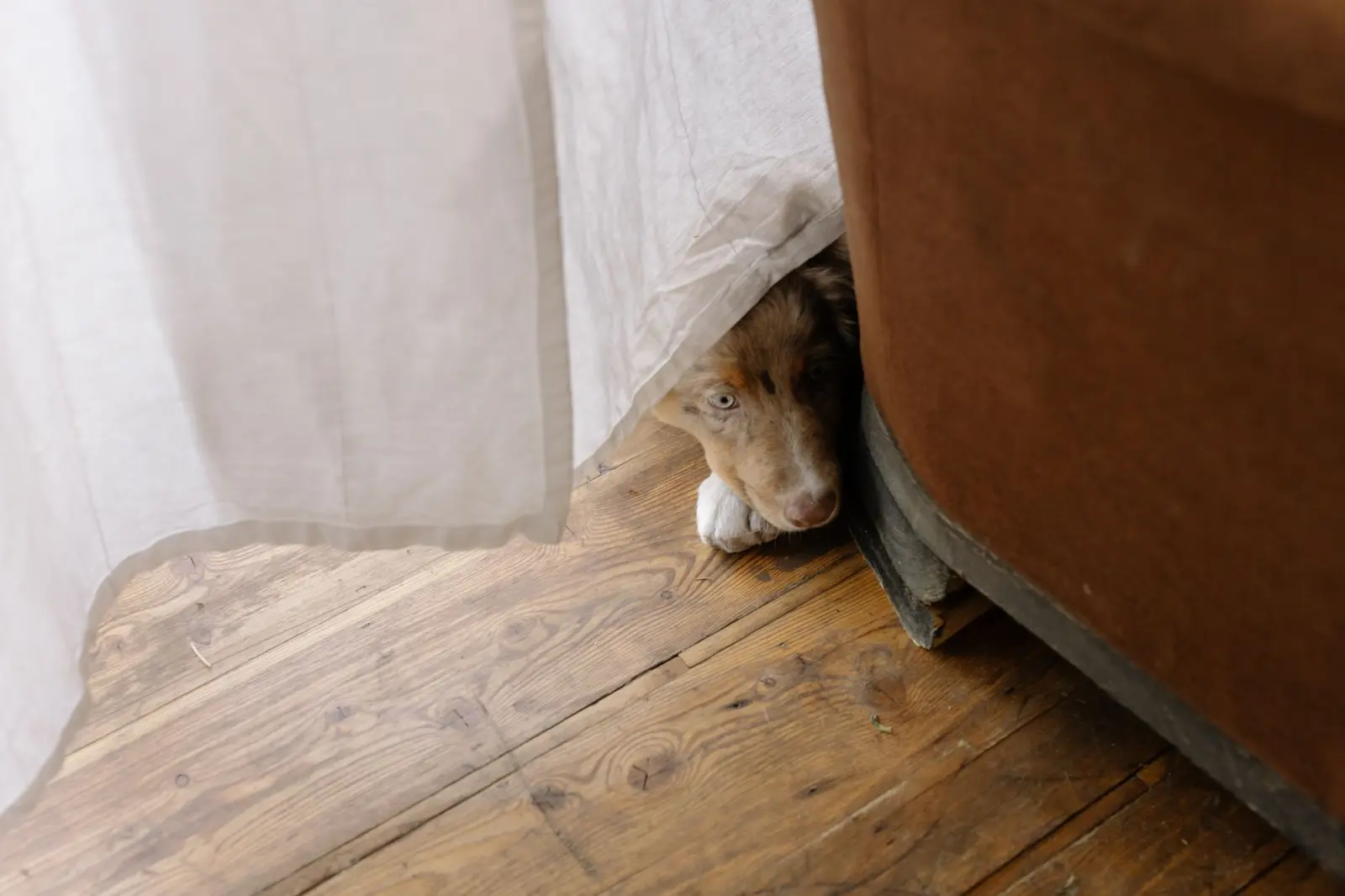
Australian Shepherds in apartments across Australian cities present a particular kind of mismatch that becomes apparent only after you’ve lived with one for a few months. These dogs were bred to work livestock across open country, and that heritage doesn’t simply disappear because they’re living in a two-bedroom unit in Melbourne or Sydney. What I’ve observed over years of working with these dogs in urban environments is that the problem isn’t really about space – it’s about what happens when their mind and body aren’t engaged in ways that matter to them.
The breed itself carries a strong herding instinct and a need for purpose. In an apartment, this doesn’t manifest as a dog that’s simply bored. It shows up as hypervigilance, obsessive behaviors, and a kind of restless intensity that owners often misinterpret as anxiety or aggression. An Australian Shepherd watching the hallway from a balcony isn’t enjoying the view – they’re monitoring territory and tracking movement patterns. That’s not a behavioral problem; that’s a dog doing what they were designed to do, just in the wrong context.
The Energy Question Isn’t What People Think
Most conversations about Australian Shepherds in apartments focus on exercise volume. The assumption is straightforward: these are high-energy dogs, so you need to tire them out. This leads to owners taking their dogs on long runs, multiple daily walks, and trips to dog parks. Some of this helps, but it’s not the full picture. What I’ve seen repeatedly is that a dog can return from a two-hour outing and still be unsettled within the apartment. The problem isn’t that they haven’t been exercised enough – it’s that the exercise hasn’t addressed what their brain actually needs.
Australian Shepherds are working dogs. They need tasks that engage their problem-solving capacity and allow them to make decisions. A walk, no matter how long, is fundamentally passive from the dog’s perspective. They’re following your route, your pace, your direction. A herding dog in an apartment needs something different. I’ve found that dogs who spend thirty minutes working through a scent puzzle or learning a new skill often settle more completely than dogs who’ve had an hour of free running. The difference is engagement versus expenditure.
This matters because apartment living amplifies the consequences of a restless dog. Excessive barking, destructive behavior, and the kind of pacing that wears grooves in your carpet – these aren’t signs of a dog that needs more running. They’re signs of a dog whose mind is still active and searching for purpose. In a house with a yard, these behaviors might be less noticeable or easier to manage. In an apartment, they become impossible to ignore and often lead to conflict with neighbors and frustration from the owner.
Behavioral Patterns in Confined Spaces
The herding instinct in Australian Shepherds doesn’t disappear indoors. Instead, it redirects. I’ve observed dogs that will fixate on family members’ movements, following them from room to room, positioning themselves strategically, sometimes nipping at heels or clothing. This isn’t aggression in the traditional sense – it’s herding behavior. The dog is trying to control movement and manage their environment. In an apartment, this can feel intense and invasive because there’s nowhere for the person to go that the dog can’t follow.
Some dogs develop obsessive behaviors around specific triggers. A dog might become fixated on the elevator sounds in the hallway, or track every footstep from neighbors above. This hypervigilance is exhausting for the dog and often leads owners to assume the dog has anxiety. Sometimes there’s an anxiety component, but more often it’s a dog whose attention-regulation systems are overwhelmed by the constant low-level stimulation of apartment living. The dog can’t help but notice and track everything because their breed was literally selected for the ability to notice and track movement across large areas.
I’ve also seen Australian Shepherds develop what looks like separation anxiety in apartments when the real issue is lack of structure. These dogs do well with clear routines and defined responsibilities. Without that framework, they become uncertain about their role and status within the household. An apartment environment can make it harder to establish that kind of structure because the space is smaller and the daily rhythm is often less predictable than it would be on a property with land.
What Apartment Living Actually Requires
Keeping an Australian Shepherd in an apartment isn’t impossible, but it does require a different approach than most owners expect. The dog needs mental engagement that’s consistent and purposeful. This might look like formal training sessions, but it also includes games that require problem-solving, scent work, and activities that give the dog a clear job to do. I’ve seen dogs thrive in apartments when their owners commit to this kind of structured engagement, even if they’re not doing extensive physical exercise.
The apartment itself needs to be set up in ways that reduce unnecessary stimulation. This might mean curtains or blinds that prevent constant visual access to hallway activity, or white noise that masks the sounds of neighbors. It’s not about creating a sensory-deprived environment – it’s about reducing the constant low-level triggers that keep a herding dog’s attention activated. Some owners also find that giving the dog a specific place in the apartment where they’re responsible for monitoring (a bed near a window, for instance) can actually help redirect the herding instinct into something more manageable.
Socialization in an apartment context is different too. These dogs don’t necessarily need constant exposure to other dogs or people. What they need is exposure that’s controlled and meaningful. An Australian Shepherd that spends five minutes meeting a new person in a structured way often learns more than one that spends an hour in an unstructured dog park environment. The breed’s intelligence means they’re picking up on subtle social cues constantly, and too much unstructured social exposure can actually increase their stress levels.
The Neighborhood Factor
Australian cities vary significantly in how apartment-friendly they are for a dog like this. In buildings with good soundproofing and neighbors who are tolerant of occasional barking, an Australian Shepherd can manage. In older apartment blocks where sound travels easily and neighbors are sensitive to noise, the same dog can become a source of constant tension. This isn’t something you can train away entirely. You can reduce barking and manage behavior, but a herding dog in an apartment will occasionally vocalize, and if your building doesn’t accommodate that, you’re fighting an uphill battle.
The availability of nearby open space matters more than people realize. An apartment in a suburb with parks within walking distance is fundamentally different from one in a dense inner-city area. The dog needs access to spaces where they can move freely and explore without constant restriction. This isn’t about running endlessly – it’s about the psychological difference between being confined and having the option to move. Dogs understand the difference between “I can’t go there” and “there’s nowhere to go.”
I’ve worked with Australian Shepherds in apartments across Melbourne, Sydney, and Brisbane. The ones that do best tend to have owners who understand that the dog’s needs are qualitatively different from other breeds, not just quantitatively different. These owners aren’t trying to make the dog adapt to apartment living – they’re creating a life within the apartment that addresses what the dog actually needs. That distinction changes everything about how the relationship develops and how sustainable the arrangement actually is.