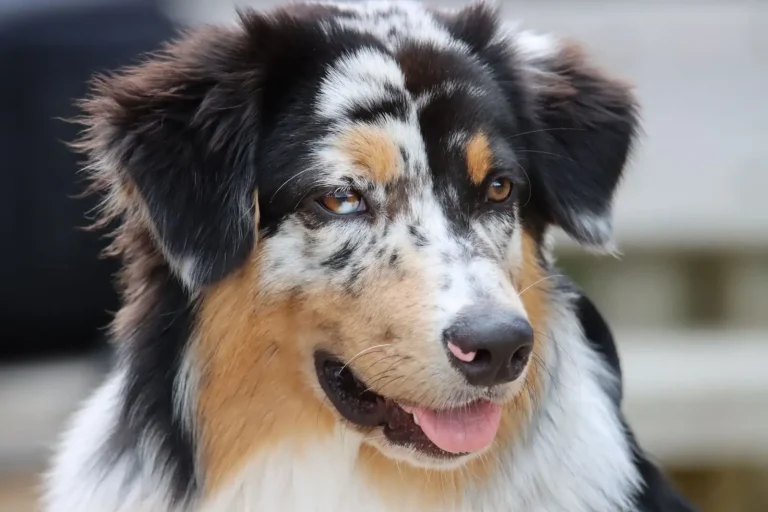

Australian Shepherds nip at heels because they were bred to move livestock. This isn’t a behavioral problem that needs fixing in most cases – it’s simply what the breed does. I’ve worked with dozens of these dogs over the years, and the heel nipping shows up consistently, especially in younger dogs or those with high energy. It’s one of those breed traits that catches owners off guard, particularly if they’ve never owned a herding dog before.
The behavior emerges from generations of selective breeding. Australian Shepherds were developed to herd cattle and sheep across open terrain, and nipping at heels was an effective way to move animals along. A quick bite at the back leg gets a cow’s attention without causing real harm. That same impulse lives in modern Australian Shepherds, even those who’ve never seen a farm. When a dog nips at your heels during a walk or while you’re moving around the house, it’s not trying to be aggressive. It’s doing what its genetics tell it to do.
What matters is understanding when this behavior is normal and when it signals something else. A young Australian Shepherd nipping at heels during play or when excited is typical. A dog that nips only at certain family members, or one that escalates to harder bites when redirected, is showing something different – possibly anxiety or a dominance issue that needs attention. The distinction matters because the response is completely different.
How It Typically Appears
The nipping usually starts around 8 to 12 weeks old, though some puppies show it earlier. You’ll notice it most when the dog is excited, when family members are moving around the house, or during play sessions. The dog crouches slightly, focuses on your heels or the back of your legs, and makes quick snapping motions. It’s not random – there’s intention behind it. The dog is trying to control movement, just as it would with livestock.
The intensity varies. Some Australian Shepherds barely make contact, almost like they’re testing the behavior. Others grab harder and hold on briefly. Neither necessarily means there’s a problem. What I’ve observed is that dogs with more outlet for their herding drive – regular work, structured play, or access to open space – tend to nip less frequently. Dogs confined to small spaces or lacking mental stimulation often escalate the behavior.
Energy and Boredom as Factors
An Australian Shepherd with insufficient exercise or mental engagement will nip more, and the nipping often becomes more insistent. This breed has significant working capacity. They were built to work all day in variable terrain, making decisions about how to move animals. A dog that spends most of its time indoors without structured activity will seek outlets for that energy, and heel nipping becomes one of them.
I’ve seen cases where owners thought they had a serious behavioral issue, only to find that adding a daily herding session, regular fetch work, or puzzle games reduced the nipping dramatically. It’s not that the dog learned to stop – it’s that the underlying drive found appropriate expression elsewhere. The nipping doesn’t disappear entirely in most cases, but it becomes less frequent and less intense.
Age and Development Patterns
Puppies nip as part of normal development, and Australian Shepherd puppies nip with more purpose than most breeds. By 4 to 6 months, many owners notice the behavior is at its peak. The dog is strong enough to grab harder, confident enough to persist, and still young enough to lack impulse control. This is when it feels most problematic.
Most Australian Shepherds naturally reduce heel nipping as they mature, particularly if they have appropriate outlets. A 2-year-old Australian Shepherd that still nips frequently at heels is either not getting enough activity, or there’s a deeper behavioral issue that needs assessment. The age of the dog tells you something important about whether this is typical development or something that requires intervention.
When It Becomes a Real Problem
Heel nipping crosses into genuine concern territory when it causes injury, when it’s directed at specific people (especially children), or when it increases in intensity despite redirection. A dog that nips gently during play is very different from one that breaks skin or leaves marks. Context matters enormously. A dog nipping at your heels while you walk from the kitchen to the living room is exhibiting breed behavior. A dog that nips at a child’s legs with increasing force when the child moves is showing something that needs to be addressed.
I’ve also seen cases where nipping is paired with other concerning behaviors – stiff body posture, intense staring, or escalation when the dog doesn’t get what it wants. That combination suggests the nipping isn’t purely herding instinct but may involve resource guarding, anxiety, or dominance-seeking behavior. Those situations warrant professional assessment because the underlying motivation is different.
Australian Shepherds that nip compulsively, regardless of context or the dog’s energy level, sometimes have an anxiety component. They nip not to herd but to self-soothe or manage stress. That’s a different issue entirely and often requires behavioral modification beyond just providing more exercise.
Living With the Behavior
Most owners find that Australian Shepherds settle into a manageable pattern with the nipping. It doesn’t disappear, but it becomes predictable and mild. The dog learns context – it nips during certain activities but not others. Some dogs nip only during play, others only when excited about dinner time or a walk.
Redirecting the nipping works better than punishing it. When a dog starts nipping at your heels, engaging it in a game, directing it to a toy, or asking for a sit or down gives the dog something else to do. Over time, the dog learns that nipping doesn’t produce the response it’s looking for, and it shifts behavior. This isn’t about suppressing instinct but about channeling it appropriately.
The reality is that owning an Australian Shepherd means accepting a certain amount of heel nipping, especially early on. It’s not a sign of a poorly trained dog or a behavioral failure. It’s simply what the breed does. Understanding that distinction – between normal breed behavior and actual problem behavior – makes living with these dogs much more straightforward.