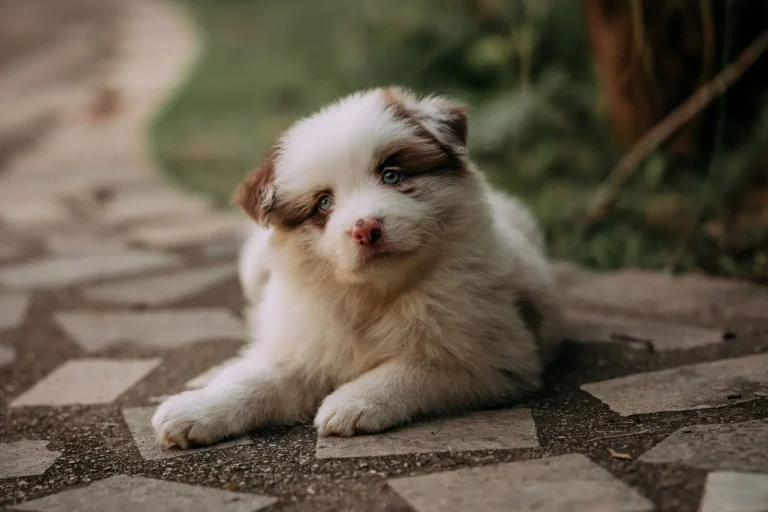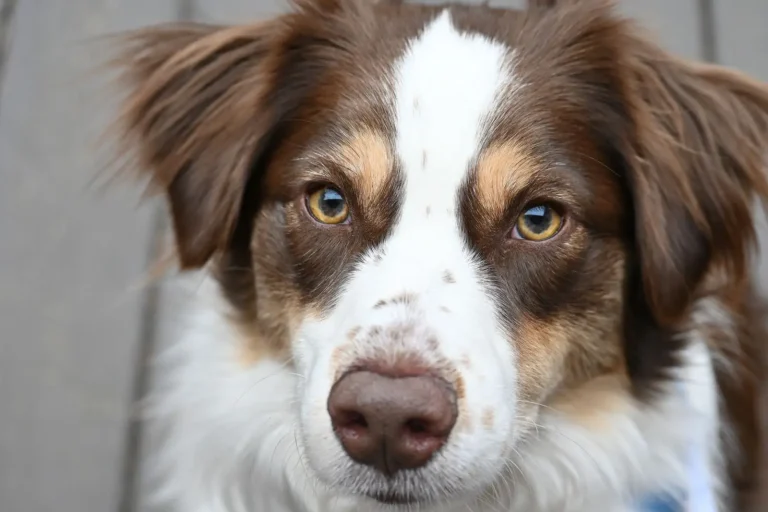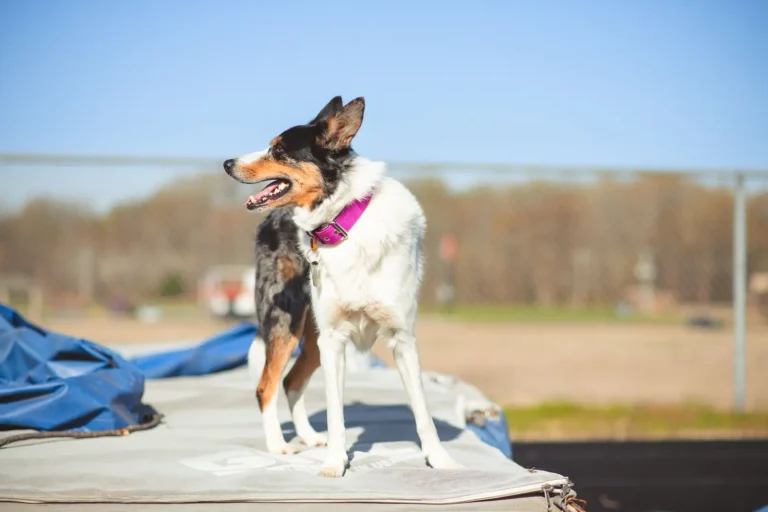

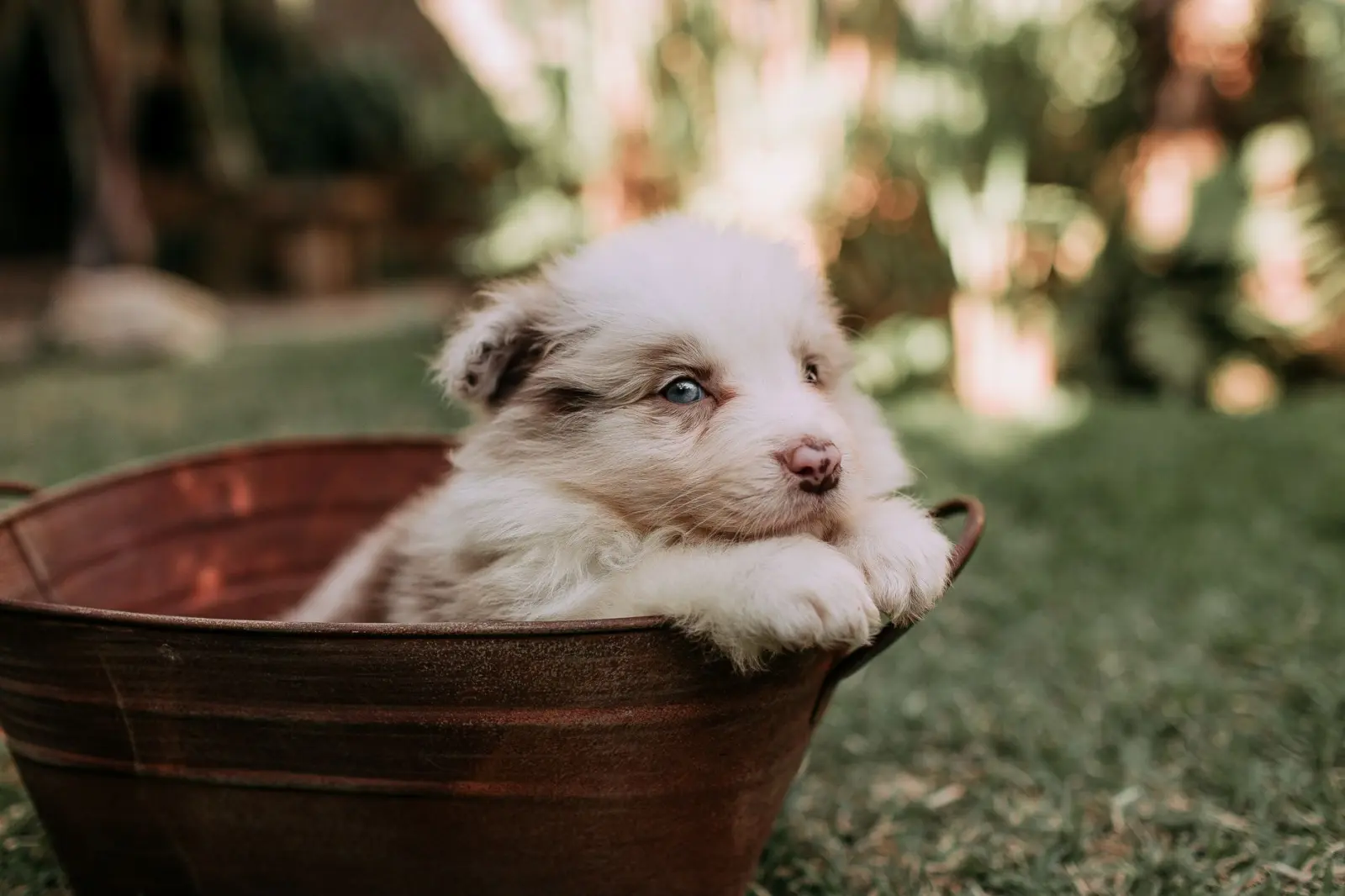
Australian Shepherd puppies are bred to work alongside people. Their entire genetic history points toward partnership, responsiveness, and close attention to their handler. This creates a particular challenge when you need them to spend time by themselves. Unlike some breeds that settle into solitude relatively easily, an Aussie pup will often interpret alone time as a problem that needs solving – usually through vocalization, destructive behavior, or escape attempts.
I’ve worked with enough Aussie litters to recognize the pattern early. These puppies don’t struggle with alone time because they’re anxious in the clinical sense. They struggle because their brain is wired to monitor their environment and respond to activity. Silence and isolation feel unnatural. A puppy left alone in a room will often panic not out of fear but out of a sense that something important is happening elsewhere and they’re missing it.
The foundation for solitude tolerance begins well before you actually leave the puppy alone. It starts in the presence of attention and routine. Aussie puppies thrive on predictability. When they know that you’re available at certain times, that play happens at specific moments, and that rest periods are built into the day, they begin to accept that being apart from you is simply part of the rhythm, not a failure of the system.
Building Comfort in Confined Spaces
Most people assume that teaching a puppy to be alone means leaving them in a large, open area. In reality, the opposite is more effective. A confined space – a crate, a small pen, or a blocked-off room – gives an Aussie puppy a defined territory and reduces the cognitive load of managing a large environment. The puppy’s nervous system doesn’t have to process as many variables. There’s a boundary, and within that boundary, there’s safety.
Crate training is particularly useful with this breed because it mimics the den-like spaces that working dogs naturally seek out. The crate becomes a place where the puppy can rest without the pressure of monitoring the entire house. I’ve noticed that puppies who are crate-trained from early on tend to self-soothe more readily when confined. They don’t see the crate as punishment or isolation – they see it as their own space.
The mistake I see most often is introducing the crate too abruptly or using it as a consequence. An Aussie puppy who associates the crate with being removed from activity will resist it. Instead, the crate should be a positive space from the beginning. Feed the puppy in the crate. Leave treats inside. Spend time near it with the door open. Let the puppy choose to go in and out initially. This removes the adversarial dynamic.
Graduated Absence and Predictable Returns
Once a puppy is comfortable in a confined space, the next phase involves brief, predictable absences. This is where many people move too quickly. They crate the puppy, leave for an hour, and return to frantic behavior. The puppy hasn’t learned that you’re coming back – they’ve only learned that you disappeared.
With Aussie puppies, I start with absences measured in seconds. Leave the room, close the door, count to five, and return. No fanfare, no celebration. The puppy should barely notice you were gone. Repeat this dozens of times over several days. Gradually extend the duration – ten seconds, then thirty, then a minute. The goal is to establish a pattern so reliable that the puppy’s brain stops treating your absence as an emergency.
The timing matters enormously. A puppy who has just had vigorous play will be more settled during your absence. A puppy who is hungry or overstimulated will struggle. I’ve found that the best results come when the puppy has had exercise, has eaten, and has had a chance to wind down before being left alone. This isn’t about exhausting the puppy into compliance – it’s about creating conditions where solitude feels natural rather than imposed.
What Goes Wrong and Why
Separation distress in Aussie puppies often escalates when owners respond to vocalization. A puppy barks or whines, and the owner returns immediately. The puppy has just learned that noise produces results. The next time they’re alone, they’ll vocalize sooner and more intensely. This feedback loop is difficult to break once it’s established.
I’ve also observed that Aussie puppies are sensitive to the emotional state of their owners during departures. A person who feels guilty about leaving, who lingers at the door, or who makes a big production of saying goodbye is actually signaling to the puppy that something significant is happening. The puppy picks up on this energy and becomes more anxious. The most effective departures are casual and unremarkable.
Some puppies develop destructive behavior when alone not because they’re anxious but because they’re bored and intelligent. An Aussie’s brain needs engagement. If the only stimulation available during alone time is the puppy’s own teeth and claws, they’ll use them. Providing appropriate outlets – a Kong with frozen peanut butter, a puzzle toy, a chew that demands sustained attention – can prevent this from becoming a habit.
Duration and Realistic Expectations
There’s a common misconception that a puppy can hold their bladder and emotions in check for extended periods. An eight-week-old Aussie puppy cannot comfortably be alone for more than an hour or two. By twelve weeks, perhaps three hours. By six months, many can manage four to six hours, though this varies by individual. Pushing beyond what a puppy can realistically handle creates setbacks rather than progress.
I’ve seen owners become frustrated when a puppy who was doing well suddenly regresses. This often happens around developmental transitions – around sixteen weeks, again around six months. The puppy’s brain is changing, their nervous system is recalibrating, and they may need a temporary return to shorter absences. This isn’t failure. It’s normal development.
The breed’s working heritage means that many adult Australian Shepherds can eventually tolerate extended alone time, but they rarely prefer it. They’re not dogs who are content to spend eight hours in a crate while you’re at work. They’re dogs who thrive on engagement and activity. Setting realistic expectations about what this breed needs – and what they can endure – prevents a lot of frustration down the road.
Over time, an Aussie puppy who has been gradually and consistently exposed to solitude will develop the ability to be alone without distress. The key is patience with the process and consistency in the conditions you create. The puppy isn’t learning to be independent in the way a more aloof breed might. They’re learning that alone time is manageable, predictable, and not a threat to the partnership you share.