

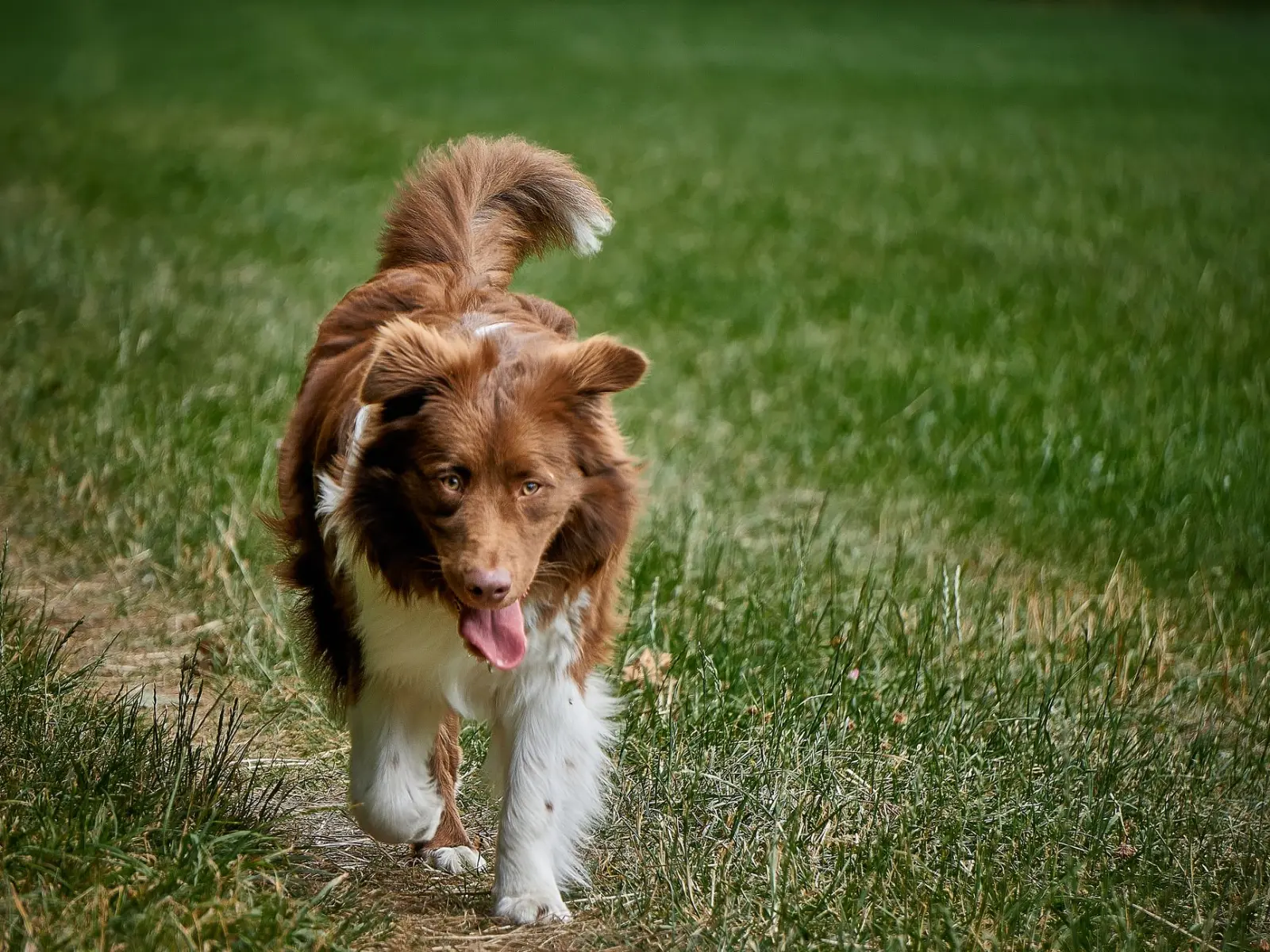
Australian Shepherds are built for work. Their metabolism reflects that heritage – they burn calories at a steady clip when they’re doing what they were bred for, and they gain weight quickly when they aren’t. Over the years, I’ve noticed that weight problems in this breed rarely develop from a single cause. It’s usually a combination of reduced activity, portion creep, and underestimating how much a dog actually needs to move.
The tricky part with Australian Shepherds is that they look deceptively sturdy. Their thick coat and muscular frame can mask excess weight until it becomes obvious. I’ve seen dogs that appeared fine in photos but were noticeably overweight in person. The ribs should be palpable without pressing hard – you should feel them easily when you run your hand along the side. The waist should be visible from above, and there should be a slight tuck to the abdomen when viewed from the side. If you can’t feel the ribs or see any waist definition, the dog is carrying too much weight.
Activity Demands Are Non-Negotiable
This breed doesn’t do well with casual walks around the block. That’s not judgment – it’s just how they’re wired. Australian Shepherds were developed to herd livestock across rough terrain for hours. Their bodies expect sustained, purposeful movement. When I’ve worked with Aussies that struggled with weight, the first question isn’t about food. It’s about what they’re actually doing each day.
A typical adult Australian Shepherd needs at least ninety minutes of meaningful activity daily. That doesn’t mean leash walking at a moderate pace. It means running, playing fetch, herding work, agility training, or sustained off-leash play. The difference between a dog that gets two thirty-minute walks and one that gets an hour of real play is substantial. The metabolic cost of intense activity isn’t just about calories burned during the exercise – it affects how their body processes food for hours afterward.
I’ve noticed that dogs living on properties with space to move maintain weight far more easily than those in urban apartments, even when their owners are conscientious about exercise. The constant low-level movement – trotting between areas, exploring, working their herding instinct on passing animals – adds up. If your Aussie doesn’t have that natural outlet, you need to deliberately create it. Structured play sessions, training work, or sports like agility or dock diving aren’t luxuries for this breed. They’re baseline requirements.
Feeding Patterns and Portion Reality
Most Australian Shepherds do well on moderate portions of quality food, but the word “moderate” gets interpreted loosely. Bag recommendations are starting points, not gospel. A moderately active adult Aussie typically needs between one and one-and-a-half cups of dry kibble daily, split into two meals. A highly active working dog might need more. A less active dog might need less. The actual amount depends on the individual dog’s metabolism, the food’s caloric density, and what else they’re eating.
What I see most often is that owners underestimate treats and table scraps. A few pieces of cheese here, a bit of chicken there, the occasional training treat – it doesn’t feel significant, but it adds up quickly. Treats should account for no more than ten percent of daily calories. For a dog eating twelve hundred calories daily, that’s only about one hundred twenty calories available for treats. A single cheese cube is roughly ten calories. A piece of chicken is thirty to fifty. Those numbers disappear fast.
The feeding method matters too. Free-feeding – leaving food out all day – rarely works well for this breed. Aussies are food-motivated and will eat beyond satiety if given the chance. Two measured meals a day gives you control and lets you monitor intake. It also helps with housebreaking and creates predictable bathroom schedules. I’ve found that dogs fed on a schedule maintain steadier weight and have fewer digestive issues than those grazing throughout the day.
Recognizing When Weight Becomes a Problem
Early weight gain is easier to address than established obesity. A dog that’s five pounds overweight at age three is a different situation than one that’s been overweight for five years. The longer excess weight persists, the more it affects joint health, metabolic function, and overall quality of life. Australian Shepherds are prone to hip dysplasia and joint issues, and extra weight accelerates those problems.
I’ve worked with Aussies that developed arthritis earlier than necessary because they carried excess weight during their prime years. Once that joint damage occurs, it doesn’t reverse. The dog becomes less active, which makes weight management harder, which stresses the joints more. It’s a cycle that’s easier to prevent than to interrupt.
If your dog is gaining weight despite what feels like adequate exercise and reasonable portions, a veterinary check is worthwhile. Thyroid issues, Cushing’s syndrome, and other metabolic conditions can affect weight in this breed, though they’re less common than simple caloric imbalance. A vet can rule those out and give you a realistic assessment of your dog’s body condition score.
Food Quality and Individual Variation
Not all foods are created equal, and Australian Shepherds show real variation in how they respond to different diets. Some thrive on high-protein kibble. Others do better with moderate protein and higher fat. Some maintain weight easily on grain-inclusive foods. Others seem to need grain-free formulas. This isn’t about marketing – it’s about individual digestive efficiency and satiety response.
I’ve seen dogs lose weight simply by switching to a different brand, even at the same caloric level. The difference usually comes down to ingredient quality, digestibility, and how the food affects satiety hormones. A dog that feels satisfied longer will be less food-motivated and easier to manage. Trial and observation matter more than following general recommendations.
Raw diets, home-cooked diets, and commercial kibble can all work for weight management if portions are appropriate. The method matters less than consistency and honest assessment of how much the dog is actually eating. Supplements, toppers, and add-ins need to be counted as calories, not treated as extras.
Australian Shepherds at a healthy weight move with ease, have visible muscle definition, and maintain the energy and focus the breed is known for. They’re less prone to joint problems, heat sensitivity, and metabolic stress. Getting there requires understanding that this breed’s weight isn’t just about food – it’s about the total picture of activity, metabolism, and honest portion control. When those align, weight management becomes straightforward rather than a constant struggle.