
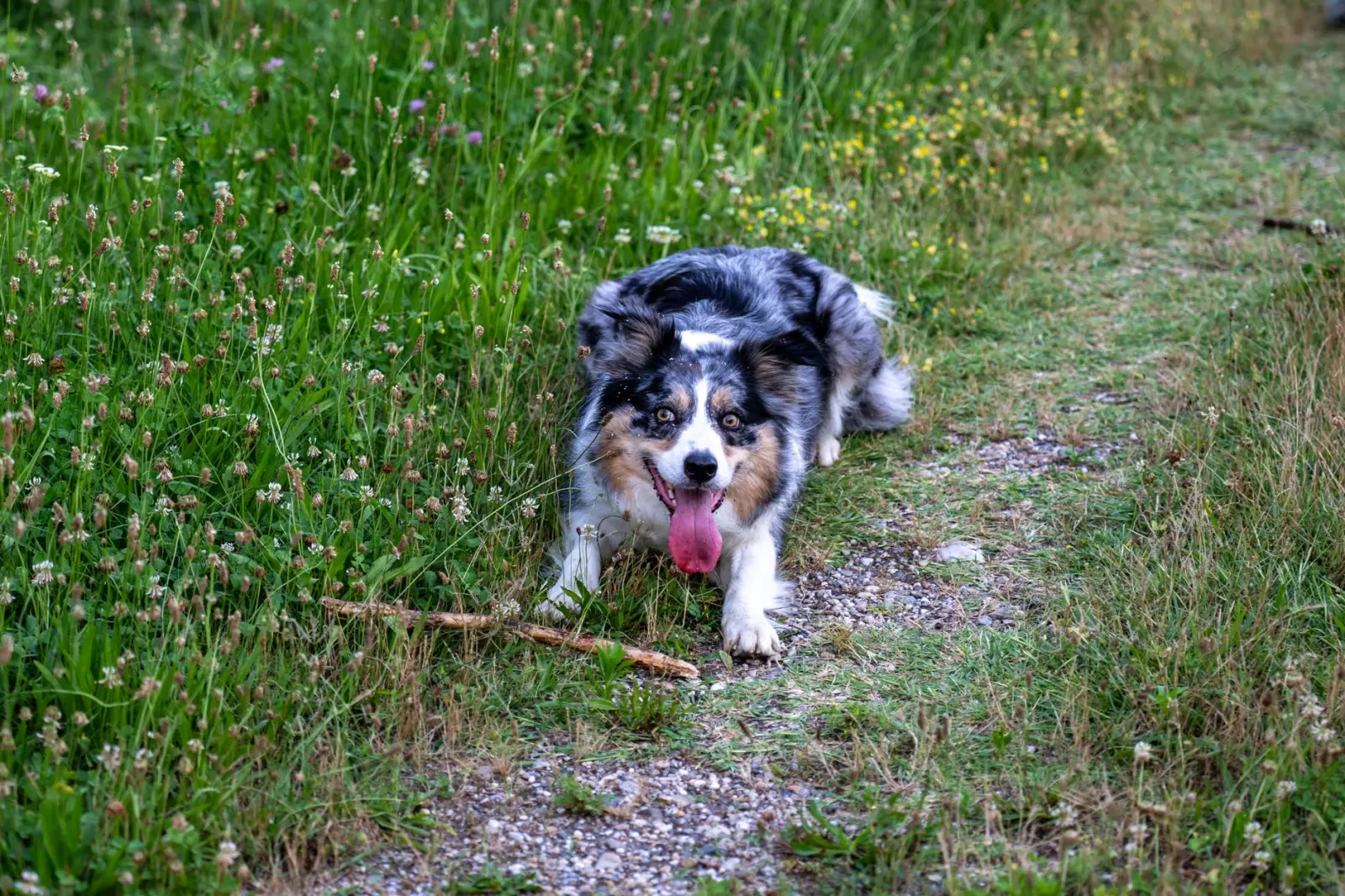
Australian Shepherds are built for work. Their ancestors moved cattle across open terrain for hours on end, and that drive hasn’t left the breed. When you live with an Aussie, you’re living with an animal whose default setting is motion. The challenge isn’t getting them to move – it’s knowing when to let them rest and understanding what happens when you don’t.
Over the years, I’ve noticed that the problems people face with Aussies rarely stem from too much exercise. Instead, they come from an imbalance: either the dog isn’t getting enough meaningful activity to satisfy their working instincts, or they’re getting constant stimulation without proper recovery periods. The second scenario is more common than most people realize, and it creates a particular kind of problem that doesn’t always look like what you’d expect.
An under-exercised Aussie will show obvious signs. They’ll pace, they’ll find ways to occupy themselves that you won’t like, and they’ll develop behavioral quirks that feel like training issues but are actually just frustration. That’s straightforward enough to diagnose. The subtler situation is the dog who’s getting plenty of activity but never truly settles. They’re always looking for the next thing, always in motion, always reactive. These dogs often end up labeled as anxious or hyperactive when what they’re actually experiencing is chronic stimulation without recovery.
What Meaningful Activity Actually Looks Like
Not all exercise is equal in an Aussie’s mind. A thirty-minute walk where they’re on a leash following your pace is different from thirty minutes of herding work or problem-solving play. The breed was developed to make independent decisions while managing livestock, so their nervous system is primed for tasks that require focus and decision-making, not just physical exertion.
I’ve worked with Aussies whose owners took them on long runs every day and were still frustrated by restlessness and reactive behavior. Meanwhile, I’ve known Aussies whose owners did two shorter sessions of focused work – maybe herding practice, maybe advanced obedience, maybe puzzle-based play – and those dogs were noticeably calmer overall. The difference is engagement. An Aussie’s brain needs to work, not just their body.
That said, physical exercise still matters. A dog that hasn’t had adequate movement will be physically uncomfortable and harder to settle. The issue is that physical tiredness alone doesn’t address the mental component. An Aussie can be physically exhausted and still mentally restless if they haven’t had the right kind of stimulation.
The Recovery Piece Most People Miss
This is where things get practical. After a solid session of real work, an Aussie needs genuine rest. Not just time in the yard or time inside the house while you’re busy. They need periods where they’re not being stimulated, not being asked to engage, not being offered new toys or activities. This is when their nervous system actually settles.
Dogs don’t naturally take long rest periods the way humans do. If you’re constantly offering stimulation – play, training, new environments, social interaction – they’ll keep taking it. It’s not that they need it; it’s that it’s available. I’ve seen Aussies whose owners were genuinely trying to tire them out by providing constant enrichment, and those dogs ended up in a state of perpetual activation. Their sleep was lighter, their reactions were sharper, and their ability to settle was compromised.
A practical rhythm that works for most Aussies is a cycle of focused activity followed by genuine downtime. This might look like a morning session of training or herding work, then several hours where the dog is resting in a quiet space without new stimulation. Another session in the afternoon or evening, then evening rest. The exact timing depends on the individual dog and their age, but the pattern of activity-rest-activity-rest is what matters.
Age and Individual Variation
Young Aussies, particularly those under two years old, have less capacity to regulate their own arousal. Their nervous systems are still developing, and they’re more likely to stay in a heightened state if given the opportunity. This is when the balance becomes especially important. A young Aussie that’s constantly stimulated can develop patterns of reactivity that persist into adulthood.
Senior Aussies have a different set of considerations. They may have less tolerance for intense physical work, but they often still have the mental drive. A ten-year-old Aussie might not be able to do an hour of herding work, but they still benefit from focused problem-solving or training sessions. The intensity decreases, but the principle remains: meaningful engagement followed by genuine rest.
Individual dogs also vary in how much activity they actually need. Some Aussies seem satisfied with moderate daily exercise and mental work. Others are genuinely high-drive and need more. This isn’t something you can determine from breed standards alone; you have to observe your own dog and see what baseline activity level allows them to be calm and settled when they’re resting.
Signs That the Balance Is Off
When an Aussie isn’t getting enough activity, the signs are usually obvious: destructive behavior, excessive barking, pacing, or obsessive behaviors like spinning or chasing shadows. These dogs are communicating that they need more engagement.
When an Aussie is getting too much stimulation without adequate recovery, the picture is different. These dogs often seem wired. They startle easily, they have trouble settling even when they’re tired, they may be reactive on walks or overly intense during play. Their sleep might be restless. They can seem anxious or hyperactive, but what’s actually happening is that their nervous system hasn’t had enough time to downregulate. Some of these dogs develop compulsive behaviors or become noise-sensitive. Others become socially reactive because they’re operating in a constant state of heightened arousal.
There’s also a middle ground where an Aussie gets plenty of physical exercise but the wrong kind of mental engagement. A dog that spends hours running in a yard or on long walks but never has to make decisions or solve problems can still develop behavioral issues because that particular need isn’t being met.
Building a Sustainable Pattern
The goal isn’t to exhaust your Aussie into compliance. It’s to create a rhythm where they get the right kind of engagement for their age and individual temperament, followed by genuine recovery time. This usually means being intentional about activity rather than reactive.
Some Aussies thrive with access to actual work – herding, stock work, or serious dog sports. Others do well with structured training sessions, puzzle games, or scent work. The common thread is that the activity requires focus and decision-making, not just movement. After that activity, the dog needs time to rest without new stimulation being offered.
I’ve noticed that owners who get the best results are the ones who think about their dog’s week the way they’d think about their own. They plan sessions of focused work, they build in recovery time, and they don’t feel compelled to fill every quiet moment with something new. An Aussie that has two good sessions of real engagement per day and genuine downtime in between tends to be calmer, more responsive, and more pleasant to live with than one that’s being constantly stimulated.
The balance isn’t something you figure out once and then maintain forever. As your Aussie ages, as seasons change, as your own life circumstances shift, what works will shift too. But the principle remains consistent: meaningful activity paired with genuine recovery time creates a dog that can be both engaged and settled, rather than one that’s always searching for the next thing.