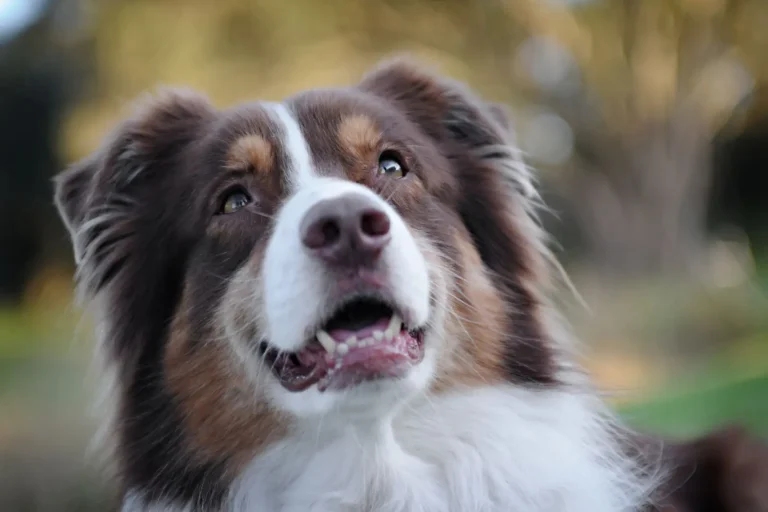

After years of working with Australian Shepherds in various settings – from ranch work to family homes – I’ve noticed that conversations about their independence tend to miss the actual picture. People ask whether Aussies are clingy or independent as if the answer is binary, but what I’ve observed is far more nuanced. These dogs operate on a spectrum that shifts depending on their individual wiring, their environment, and what they’ve learned to expect from their people.
The Australian Shepherd was built for a specific job: managing livestock across open terrain with minimal direction. That heritage matters, but not in the way many assume. Yes, they were bred to work independently of a handler at distance. But they were also bred to stay connected to their job and their person. Those two traits aren’t opposites. An Aussie working cattle needs to know where the handler is, what the handler wants, and when to check in. That’s not clinginess – that’s attentiveness. The problem arises when people bring that same dog into a home and then interpret that attentiveness as neediness.
What I’ve seen most often is that Aussies are highly responsive to structure and routine. When a dog knows what’s expected, when meals happen, when work or play occurs, they settle. They don’t pace or follow you from room to room out of anxiety. They relax because the world makes sense. Remove that structure, and suddenly the same dog looks clingy. They’re checking in more, staying closer, seeming unable to entertain themselves. It’s not that the dog’s temperament changed. The dog is responding to uncertainty.
The Work Drive Versus Attachment Confusion
One of the most common misreadings I encounter is conflating a dog’s need for engagement with clinginess. An Australian Shepherd with insufficient mental or physical outlet will follow you around, whine, nudge your hand, and generally seem dependent. This looks like separation anxiety or neediness. But it’s usually frustration. The dog has energy, intelligence, and a drive to do something, and there’s nothing to do. So the dog does what’s available: it focuses on you.
I’ve watched this pattern dozens of times. A family brings home an Aussie puppy, keeps it indoors most of the day, plays with it occasionally, and then wonders why the dog won’t leave them alone. They interpret it as the dog being clingy or needy. What’s actually happening is the dog is understimulated and has learned that pestering the human is the most interesting thing available. Give that same dog a job – herding lessons, agility training, consistent daily work – and the “clinginess” often evaporates. The dog becomes more independent because its actual needs are being met.
That said, there are individual Aussies who genuinely are more attached to their people than others. Temperament varies. Some dogs are naturally more handler-focused, more eager to please, more anxious when separated. These traits exist on a spectrum within the breed. But I’ve found that even these more people-oriented dogs don’t become problematic if they have adequate outlets and clear expectations. They might choose to be near you more often, but they’re not distressed or dysfunctional about it.
What Separation Actually Looks Like
True separation anxiety in an Aussie is different from what most people describe as clinginess. A dog with genuine separation distress will panic when left alone. Destructive behavior, vocalization, attempts to escape, house soiling despite being housetrained – these are signs of real distress. I’ve seen this in Aussies, though it’s less common than people think. It usually emerges from a specific trigger: a dog that was never gradually acclimated to alone time, or a dog that experienced a traumatic event, or occasionally a dog with a naturally anxious temperament.
Most Aussies I’ve worked with who are left alone for reasonable periods – a few hours during a workday, for instance – handle it fine. They might greet you enthusiastically when you return, but that’s not anxiety. That’s just normal dog behavior. The distinction matters because it changes how you respond. A dog that’s happy to see you needs no intervention. A dog that’s panicking needs a different approach entirely.
Individual Variation and Early Experience
I’ve noticed that how an Aussie is raised in its first year shapes how independent it becomes. A puppy that’s socialized to different environments, exposed to alone time gradually, and given consistent boundaries tends to develop into a more self-sufficient adult. A puppy that’s constantly with people, rarely left alone, and treated as a constant companion often stays more dependent. This isn’t breed-specific – it’s true of most dogs – but it’s particularly visible in Aussies because of their intelligence and responsiveness to patterns.
The breed’s eagerness to work and please can actually make this worse. An Aussie that’s been rewarded for constant attention and engagement will naturally seek more of it. The dog isn’t broken or clingy by nature. It’s learned that this is how the relationship works. Changing that dynamic requires patience and consistency, but it’s entirely possible.
What I’ve learned to tell people is this: Australian Shepherds are not inherently clingy, but they’re not inherently independent either. They’re responsive. They adapt to what their environment and their people teach them. A dog with a job, clear structure, and appropriate alone time tends to be confident and capable of entertaining itself. A dog without those things tends to be focused on its person, not because of neediness but because that’s where the engagement is. The question isn’t really whether Aussies are clingy. It’s whether they’re being given what they actually need to thrive.