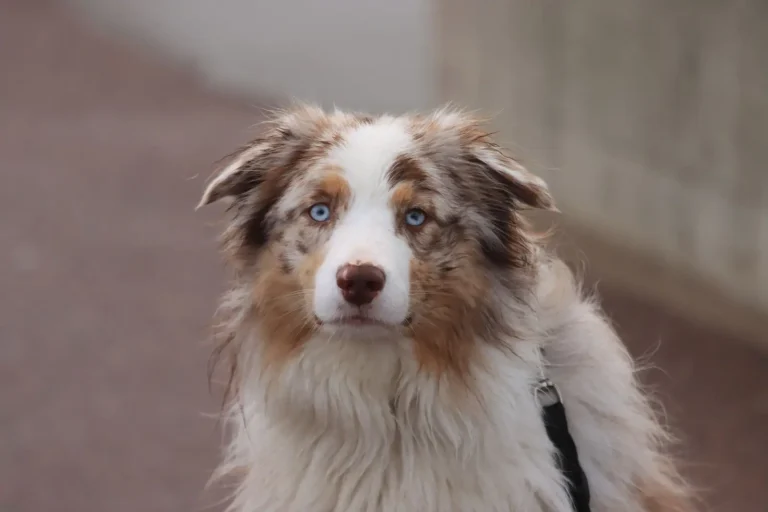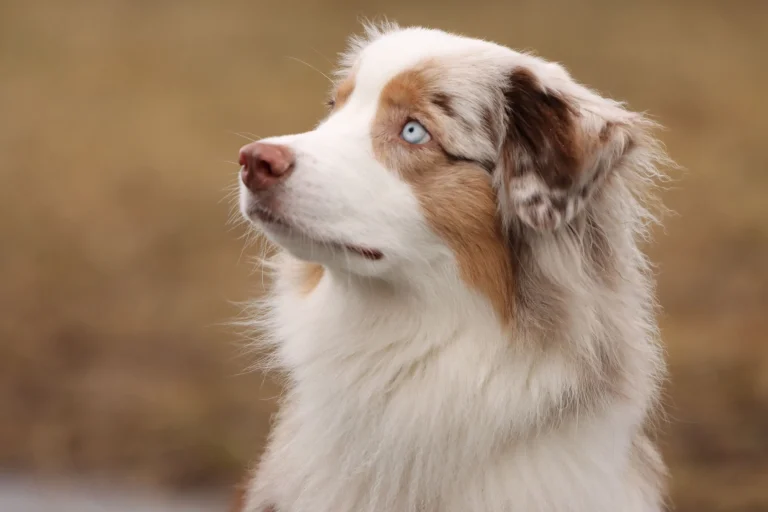

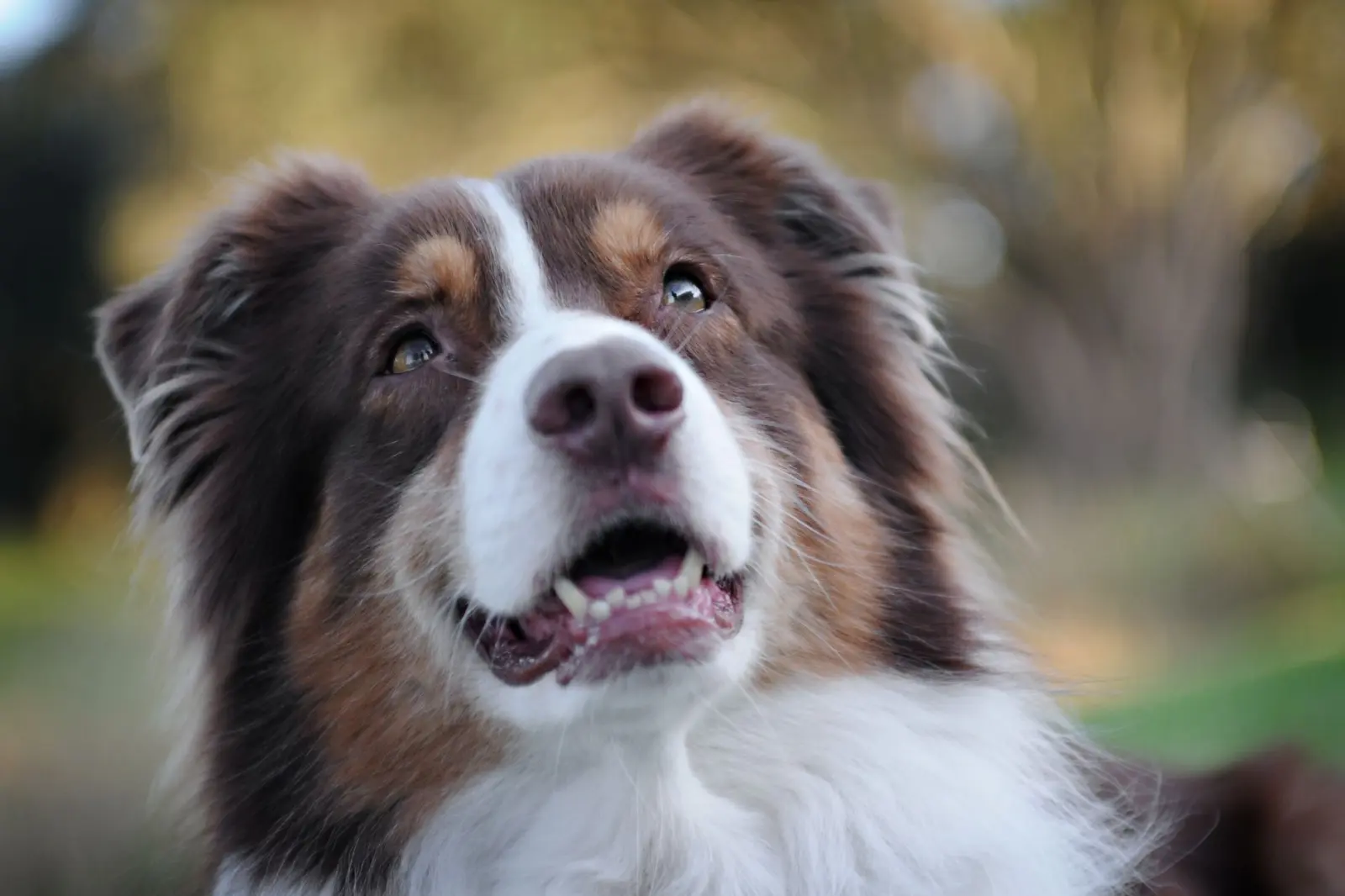
Australian Shepherds have ears that sit in a fairly predictable range, but there’s more variation within that range than many owners realize. After years of working with this breed, I’ve noticed that people often worry about ear position when there’s nothing wrong, while occasionally missing genuine issues that warrant attention. The ears on an Aussie are meant to be moderately sized and triangular, set on the sides of the head at roughly the level of the eyes. They’re mobile – they move independently and respond to sound and emotion – which is part of what makes them expressive dogs.
The most common ear carriage in Australian Shepherds is what breeders call “alert” or “semi-erect.” This means the ears stand partially upright, with the tips folding forward slightly or pointing to the sides. Some dogs carry their ears almost fully upright when attentive, then relax them into a more folded position when calm. This is entirely normal and doesn’t indicate a problem. What matters is that the ear structure itself remains consistent and the dog responds normally to sound.
Ear Position Changes Through Life Stages
Puppies often have much softer ear cartilage, and their ears may flop more loosely than an adult’s. This is completely expected. As an Aussie grows, the cartilage hardens and the ear carriage typically becomes more defined. By around six to twelve months, most dogs settle into their adult ear position. I’ve seen puppies with ears that seemed to be all over the place at eight weeks look perfectly normal by their first birthday. The process isn’t always linear – ears can seem to shift back and forth as the pup develops, especially during growth spurts when one part of the body develops faster than another.
In older dogs, ears sometimes become more relaxed or droopy simply because the muscles and cartilage lose some tone. This is a natural part of aging and not a sign of illness unless it happens suddenly or is accompanied by other symptoms.
When Ear Position Becomes a Real Concern
The key distinction is between normal variation and actual problems. A sudden change in how a dog carries their ears – especially if one ear drops while the other remains alert – can indicate nerve involvement, ear pain, or neurological issues. This kind of change warrants a veterinary check. Similarly, if an ear that was normally upright suddenly becomes completely floppy, or if a dog is holding an ear at an odd angle and seems uncomfortable, that’s worth investigating.
Chronic ear infections can sometimes cause an ear to droop or be held differently because the dog is trying to avoid pressure or pain on that side. In these cases, you’ll usually notice other signs: head shaking, scratching, discharge, or odor. Aussies with longer ear leather – the actual flap itself – are more prone to ear issues simply because moisture and debris can get trapped more easily, especially in dogs that spend time in water or humid environments.
The Difference Between Breed Standard and Individual Normal
If you’re looking at show standards or breed documentation, Australian Shepherds are described as having ears that are triangular and set on moderately high. But there’s real flexibility within that description. Some Aussies naturally carry their ears more forward, some more to the side. Some have slightly larger ears relative to their head size, others smaller. As long as the ears are symmetrical, responsive, and not causing the dog discomfort, these variations are just individual differences, not defects.
I’ve worked with Aussies whose ears were nearly always fully alert and others whose ears stayed in a relaxed, folded position most of the time. Both types had perfectly normal hearing and no underlying issues. Temperament plays a role too – anxious or highly alert dogs tend to carry their ears more upright, while calm or relaxed dogs often have softer ear carriage.
Practical Ear Health Beyond Position
Monitoring ear position is less important than monitoring ear health itself. What matters more is keeping the ear canal clean and dry, especially for Aussies that swim or spend time in wet conditions. The breed doesn’t have excessive ear hair, but some individual dogs do grow hair in the ear canal, which can trap moisture and create an environment for infection. If you notice your dog shaking their head frequently, scratching at their ears, or if there’s any odor or visible discharge, those are the real red flags – not the position of the ears themselves.
Regular visual checks are straightforward. A healthy ear canal should be pink, clean, and dry. There shouldn’t be excessive wax buildup, redness, or swelling. If your dog’s ears stay in a consistent position relative to their normal baseline, and they don’t seem bothered by touch or sound, ear position itself is almost certainly normal.
The practical reality is that Australian Shepherd ears are remarkably consistent within the breed, even as individual variation exists. Most owners worry about ear position far more than they need to. What actually matters is whether the ears are healthy, whether the dog hears well, and whether any changes happen suddenly or are accompanied by signs of discomfort. Position alone is rarely the issue.