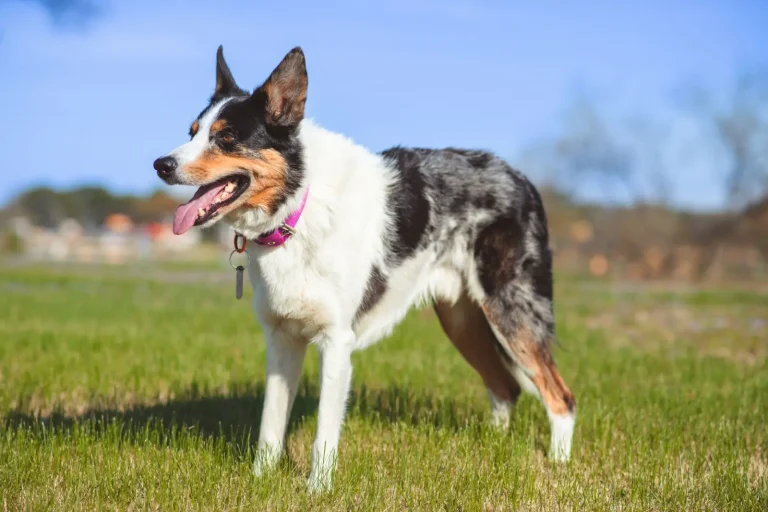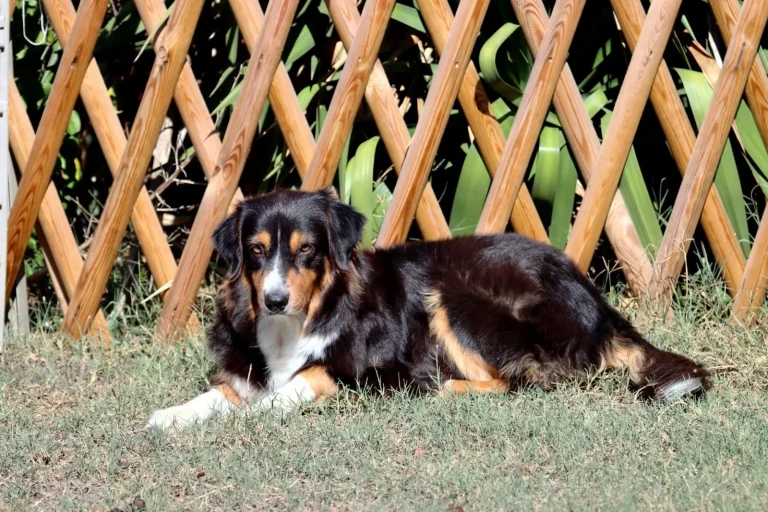

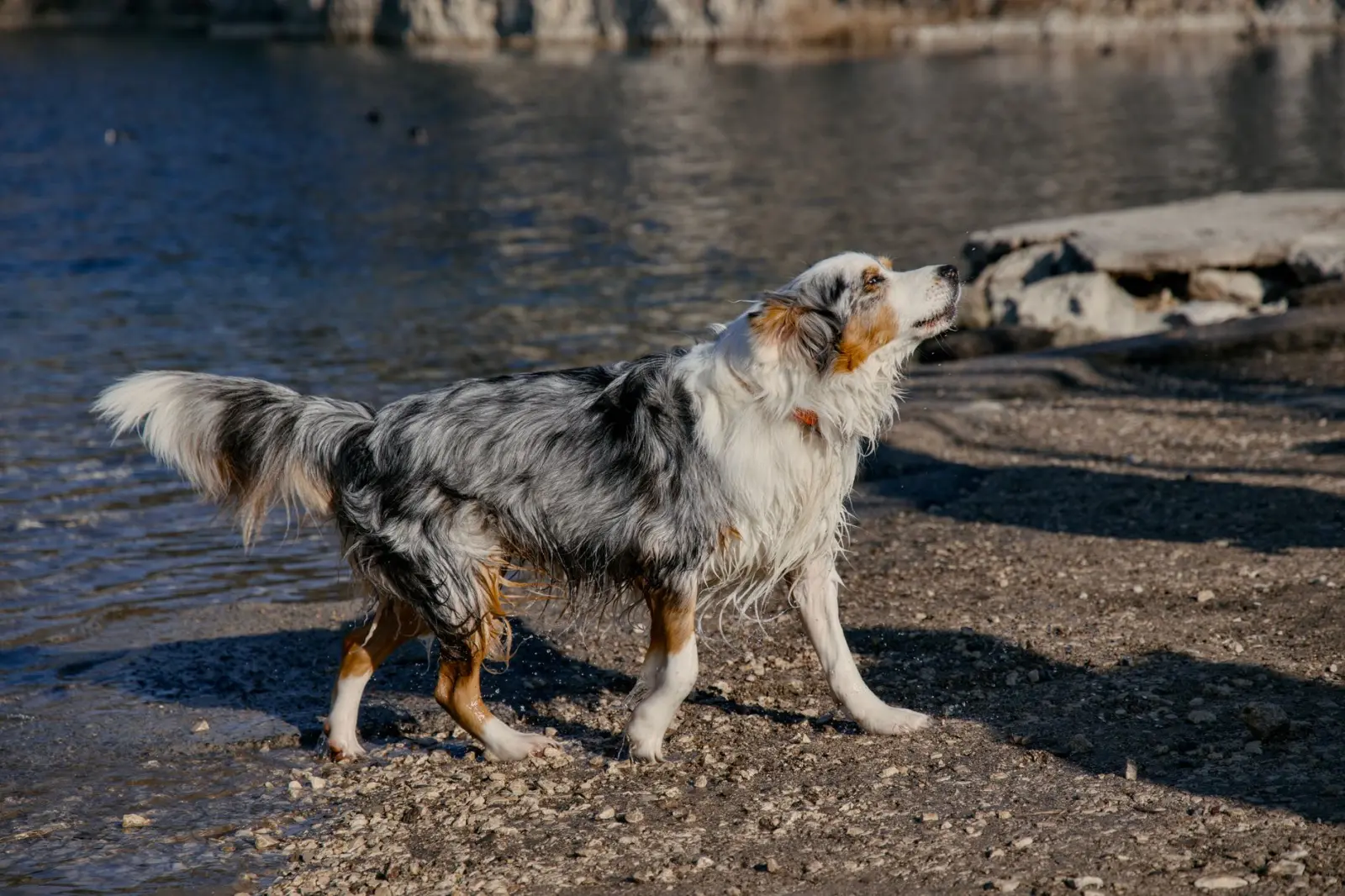
Australian Shepherds tend to surprise people with how much dog fits into a medium-sized frame. I’ve worked with these dogs long enough to know that size expectations often don’t match reality until you’re actually living with one. They’re not small, and they’re not large in the traditional sense, but they carry themselves with a presence that makes them feel bigger than the numbers suggest.
The breed standard puts adult males between 20 and 23 inches at the shoulder, with females running slightly smaller at 18 to 21 inches. Weight for males typically falls between 50 and 65 pounds, while females usually land in the 40 to 55 pound range. These aren’t hard boundaries – individual dogs vary, and what matters more is the relationship between height and weight. A well-proportioned Australian Shepherd should look athletic, not bulky or lean.
What I’ve observed over the years is that many people underestimate how substantial these dogs are in person. When you see one standing next to a person sitting on a couch, they reach nearly to chest height. Their bone structure is solid without being heavy, and their musculature develops noticeably as they mature. This is a working dog, and their build reflects that heritage.
Growth Timeline and Development
Australian Shepherds don’t reach their full size overnight. Puppies grow rapidly in the first six months, then the growth rate slows considerably. Most dogs reach close to their adult height by around 12 months, though they continue filling out and gaining muscle definition until roughly 18 to 24 months old. I’ve seen dogs that looked almost fully grown at a year still develop noticeably broader chests and more defined hindquarters over the following months.
The growth curve isn’t linear. A puppy at three months might weigh 20 to 25 pounds, then jump to 40 pounds by six months. By nine months, many are within 5 to 10 pounds of their final weight, but they’re still gangly and uncoordinated. This awkward phase is normal and temporary. Their joints are still developing, their coordination is catching up to their size, and their mental maturity lags behind their physical growth.
Variation Within the Breed
Not all Australian Shepherds fit neatly into the standard range. Breeding lines vary, and you’ll encounter dogs that run larger or smaller than typical. Some breeders have consistently produced larger dogs, while others focus on the leaner end of the spectrum. A dog from working lines might be more compact and muscular, while one from show lines could be taller and more refined. Neither is wrong – it’s just variation within the breed.
I’ve worked with Australian Shepherds that topped out around 45 pounds and others that reached 75 pounds. The difference isn’t always obvious from the pedigree alone. Nutrition, exercise, and individual genetics all play a role. A dog that’s overfed as a puppy might grow larger than its genetic potential, while one that’s underfed could end up smaller and potentially develop structural issues.
Factors That Influence Adult Size
Genetics is the primary driver, but it’s not the only one. Nutrition during the growth phase matters significantly. Puppies need appropriate protein and fat levels, but overfeeding – especially with large-breed puppy formulas – can accelerate growth too quickly and stress developing joints. I’ve seen dogs develop joint problems later in life that could be traced back to being overfed as puppies. The goal is steady, moderate growth, not rapid expansion.
Exercise and activity level during development also influence how a dog develops. Australian Shepherds are active by nature, and appropriate exercise supports healthy muscle development. However, excessive jumping and high-impact activity on immature joints can cause problems. Most veterinarians recommend avoiding intense jumping and long-distance running until dogs are at least 12 to 18 months old, depending on their individual growth rate.
Spaying or neutering affects size in subtle ways. Dogs that are altered tend to mature slightly larger and carry a bit more weight than intact dogs of the same line. This is a consistent observation, though the difference is usually modest – perhaps 5 to 10 pounds on average. It’s not a reason to avoid the procedure, but it’s worth noting if you’re comparing sizes.
What Size Means for Daily Life
An adult Australian Shepherd is large enough to require serious consideration about living space and exercise needs. They’re not apartment dogs, though some adapt to smaller spaces if they get adequate activity. They need room to move, and they need regular work or exercise to stay balanced. A bored, under-exercised Australian Shepherd becomes destructive and develops behavioral issues that have nothing to do with their size and everything to do with their mental and physical needs.
Their size also affects practical matters like vehicle space, crate training, and grooming. They shed heavily, and their coat maintenance is substantial. A dog that size moving through your house sheds enough hair to notice. Grooming requires time and effort, and bathing a 60-pound dog with a double coat is a commitment. These are real considerations that go beyond just the numbers on a scale.
Australian Shepherds also have the strength to pull on a leash if not trained properly. Their size combined with their drive means that loose-leash walking and solid obedience aren’t optional extras – they’re essential. I’ve seen people surprised by how much force a 55-pound dog can generate on a leash, especially one that’s been bred for herding and has natural instincts to move and chase.
Health Considerations Related to Size
Weight management becomes important as these dogs age. An Australian Shepherd that’s overweight is at higher risk for joint problems, particularly hip dysplasia, which occurs in the breed at moderate rates. Keeping a dog lean and fit throughout its life reduces stress on the joints and supports longevity. This means regular exercise and careful feeding – not restriction that leaves a dog hungry, but appropriate portions matched to activity level.
The breed’s moderate size is actually advantageous for health in some ways. They’re large enough to avoid many toy-breed problems but not so large that they experience the joint and cardiac stress of giant breeds. Most Australian Shepherds live 12 to 15 years with good care, and their size is part of why they tend to age relatively well compared to larger breeds.
Understanding what to expect with size helps set realistic expectations from the start. An Australian Shepherd is a medium-to-large dog with the energy and drive of a working animal. Their physical presence, combined with their intelligence and activity level, makes them a significant commitment. Size is just one factor, but it’s one that affects everything from housing to exercise to long-term health management.