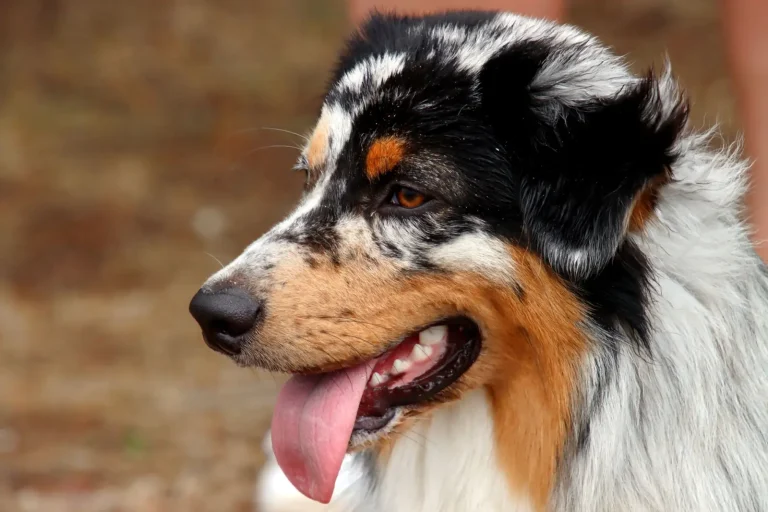


After years of working with both Australian Shepherds and Border Collies, I’ve learned that the confusion between these two breeds runs deeper than appearance. They’re both herding dogs, both intensely intelligent, and both capable of exhausting an unprepared owner within weeks. But they’re genuinely different animals, and those differences matter far more than most people realize when they’re deciding which one to bring home.
The Border Collie is, without question, the more intense working dog. I’ve seen them work sheep with a precision that borders on obsessive – they’ll lock onto a single animal and maintain eye contact and body position with almost mechanical consistency. This isn’t just training. It’s hardwired. A Border Collie’s brain is built for one job: reading livestock and moving them with minimal physical contact. That singular focus is their strength and, frankly, their burden when they’re not doing that work.
Australian Shepherds are more versatile in their working style. They were developed to handle larger herds across open terrain, which means they needed to be adaptable, more independent in decision-making, and capable of working without constant direction. This translates to a dog that’s intelligent but not quite as laser-focused as a Border Collie. In a home setting, that’s often a meaningful distinction.
Energy and Mental Demand
Both breeds are high-energy, but the nature of that energy differs. A Border Collie’s energy is primarily mental. They need to be thinking, problem-solving, working through a task. A tired Border Collie is one that’s been mentally engaged, not necessarily one that’s run five miles. I’ve seen Border Collies lie quietly on a couch for hours after an hour of focused work – herding, advanced obedience, puzzle games, anything that demands their full attention.
Australian Shepherds have more physical energy mixed with their mental requirements. They’re built for endurance work across terrain, so they genuinely need both physical exercise and mental stimulation. A long run alone won’t satisfy them, but it matters more than it does for a Border Collie. They’re less content with pure mental games and more likely to need actual movement.
This is where I see the most common mismatch. People assume both breeds need the same type of exercise, so they get a Border Collie thinking it’ll be satisfied with daily running. It won’t. It’ll become destructive, obsessive, and difficult to live with. But the destructiveness looks different from an Australian Shepherd’s boredom. A Border Collie might fixate on herding family members, chase shadows, or develop compulsive behaviors. An Australian Shepherd is more likely to be generally chaotic – jumping, nipping, unable to settle.
Trainability and Independence
Border Collies are easier to train in the formal sense. They’re eager to understand what you want, responsive to subtle cues, and genuinely motivated by the work itself. But this comes with a catch: they’re also more likely to develop anxiety or frustration if they don’t have a clear job. They can become neurotic without proper outlets. Their intelligence sometimes works against them in a home environment because they notice inconsistencies in rules and boundaries that other dogs might miss.
Australian Shepherds are intelligent but more pragmatic. They’re willing to work with you, but they also have a stronger independent streak. They’ll question authority in a way Border Collies often won’t. This makes them slightly more forgiving of inconsistent training and better suited to homes where the owner isn’t obsessively detail-oriented. They’re also more likely to be content with a less structured life, though they still need clear boundaries and purpose.
Sociability and Temperament
Border Collies can be reserved with strangers, and some lines are genuinely shy. This isn’t aggression – it’s caution. They’re watching, assessing. In a home with frequent visitors or a busy social schedule, this can be a real issue. They don’t naturally warm to new people, and forcing socialization doesn’t always help. Some Border Collies remain wary their entire lives.
Australian Shepherds tend to be more outwardly friendly. They’re curious about people and generally more adaptable to different social situations. That said, they’re not indiscriminate – they still have protective instincts and will alert you to strangers. But they’re more likely to eventually accept new people into their circle.
Both breeds have herding instincts that can manifest as nipping at heels, especially with children. This is breed-typical behavior, not a sign of aggression, but it matters if you have young kids. Border Collies can be more intense about it, while Australian Shepherds are often easier to redirect.
Size and Practical Considerations
Australian Shepherds are typically larger – 45 to 65 pounds is common, and some are bigger. Border Collies are usually smaller, around 30 to 55 pounds. This affects housing requirements, food costs, and how much space they need to move. In an apartment, a Border Collie’s smaller size is an advantage, but their mental energy requirements remain unchanged. Size doesn’t solve the exercise problem.
Both breeds shed significantly. This isn’t a minor detail. You’ll find hair everywhere, year-round, with heavier shedding seasons. If you’re particular about a clean home, both are challenging. Neither breed is a good fit for someone who can’t tolerate dog hair.
Long-Term Suitability
If you’re looking for a working dog – actual herding, advanced sports like agility or trialing, or serious obedience work – either breed can excel, though Border Collies have a slight edge in competitive venues due to their intense focus and responsiveness. If you want a dog that can work independently on a farm or property, an Australian Shepherd might actually be better suited.
For a home environment without a specific working purpose, Australian Shepherds are generally more adaptable. They can be satisfied with a good daily routine, regular exercise, and mental engagement. Border Collies in homes without a clear job often struggle, no matter how much exercise they get. The mental void is the real problem.
The honest assessment after working with both breeds is this: a Border Collie is a specialist. They’re extraordinary at what they do, but they’re not flexible about it. An Australian Shepherd is more of a generalist – capable, intelligent, but able to adjust to different living situations. Choosing between them isn’t really about which is “better.” It’s about which one fits the life you actually have, not the life you think you’ll have.