

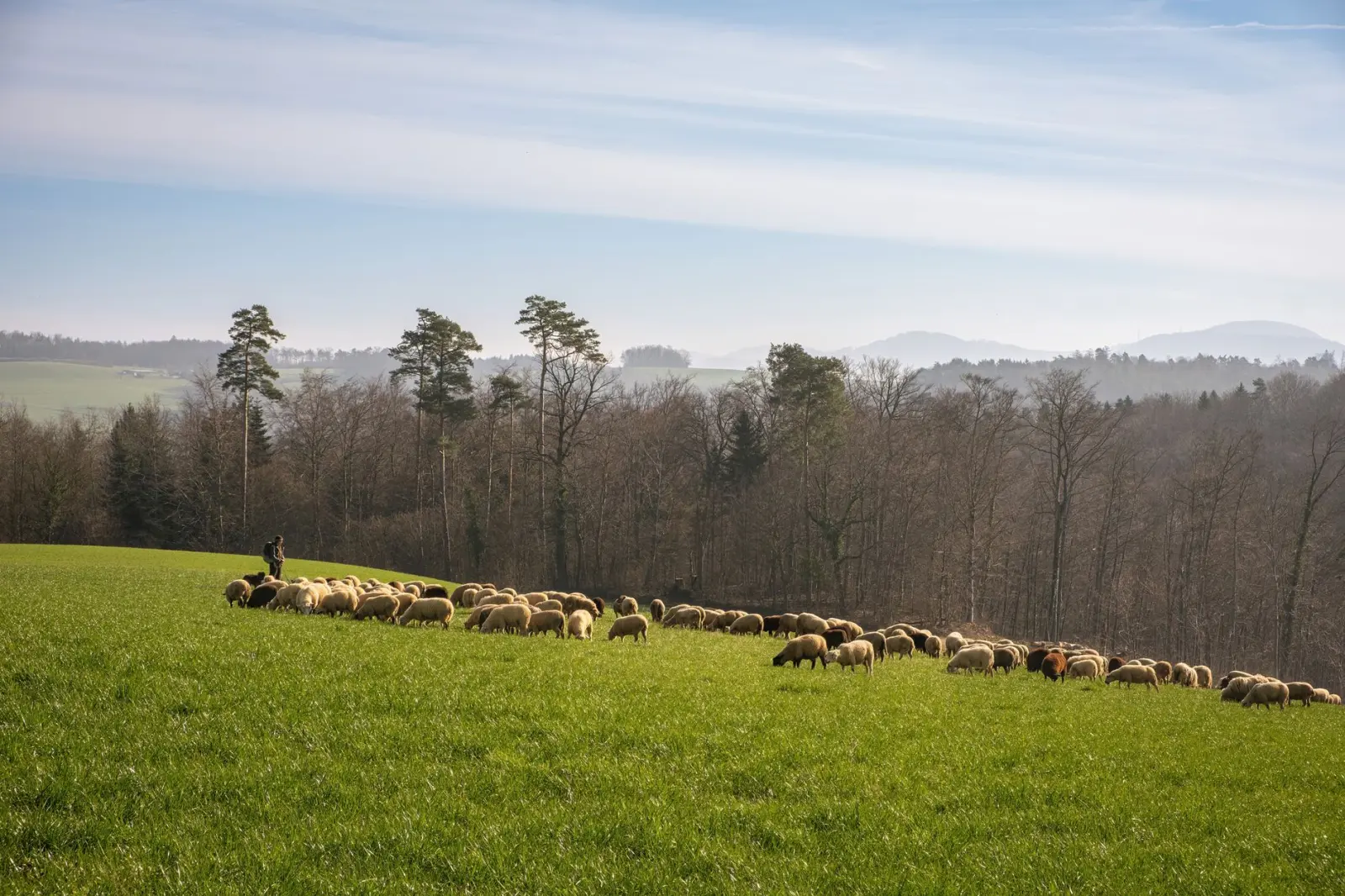
After years of working with Australian Shepherds, I’ve noticed that the question “do they need a job” usually comes from someone who’s either heard the breed is high-maintenance or who’s already living with one and sensing restlessness. The answer isn’t as straightforward as the breed reputation suggests.
Australian Shepherds do have a strong herding instinct and were developed to work livestock all day. That history is real and shows up in their behavior patterns. But what people often misunderstand is the difference between having a work drive and actually needing formal employment. I’ve seen well-adjusted Aussie Shepherds living in apartments with owners who work full-time, and I’ve seen anxious, destructive ones in homes with acres of land and minimal structure. The breed’s needs are more nuanced than the marketing around them.
The core issue isn’t whether your dog herds sheep. It’s whether their mind and body are engaged consistently. An Australian Shepherd without adequate mental stimulation will find ways to occupy itself, and those ways are rarely what you want. Herding the cat. Nipping at children’s heels. Obsessive ball chasing. Destructive chewing that seems to come from nowhere. These aren’t signs of a “bad” dog or a dog that needs a ranch. They’re signs of an understimulated brain looking for an outlet.
What “Having a Job” Actually Means
When people talk about Australian Shepherds needing a job, they’re usually referring to one of several things. Some mean formal work – herding trials, agility competition, obedience training at a serious level. Others mean daily structured tasks like fetching, puzzle games, or training sessions. Still others just mean “something to do” that engages the dog’s problem-solving ability.
The first category – competitive work or formal training – is genuinely optional. I’ve known Australian Shepherds who never stepped foot in a trial ring and were perfectly content. But they had owners who understood the breed’s need for mental engagement and built that into daily life in other ways. The second and third categories are where the real distinction lies. Most Australian Shepherds do benefit from some form of structured mental work, but it doesn’t have to look like herding cattle or competing in trials.
A daily training session, even just fifteen minutes, can make an enormous difference. Teaching new commands, working through puzzle toys, playing games that require decision-making – these all tap into the same part of the brain that makes herding work satisfying. The breed was selected for independent thinking and problem-solving, not just for physical work. That’s the part that often goes unmet in a typical pet home, and that’s where problems emerge.
The Role of Exercise vs. Mental Stimulation
One of the most common mistakes I see is owners thinking that a long walk or a run will satisfy an Australian Shepherd’s needs. Physical exercise is necessary, absolutely, but it’s not the same as mental work. A tired body doesn’t guarantee a settled mind. I’ve watched dogs come back from two-hour hikes and immediately start herding behavior or destructive chewing because their brains were never engaged.
An Australian Shepherd can burn off energy and still feel bored. The breed was designed to make decisions about moving livestock, to respond to subtle cues, to work independently. A fetch session or a walk, no matter how long, doesn’t replicate that. A puzzle toy that requires the dog to figure out how to access a treat, or a training session where the dog has to think through a new command, or a game where the dog has to make choices – those things satisfy something that pure exercise doesn’t touch.
This is why I’ve seen Australian Shepherds do well with owners who work full-time but who dedicate even a small amount of time to structured mental work. And I’ve seen them struggle with owners who have all the time in the world but no real engagement plan. The time investment matters less than the consistency and the type of engagement.
Individual Variation and Temperament
Not every Australian Shepherd has the same intensity of drive. The breed standard describes them as energetic and intelligent, but within that there’s real variation. Some dogs are naturally more independent and driven; others are more laid-back and people-focused. Breeding lines matter too. Dogs from herding lines often have sharper instincts than those from show or pet lines, though that’s not a hard rule.
I’ve worked with Australian Shepherds that seemed content with a moderate amount of mental stimulation and daily exercise. I’ve also worked with ones that seemed to have an insatiable need for engagement. Age plays a role as well. Puppies and young adults typically have higher drive and more chaotic energy. Older dogs often settle more easily, though a bored older Aussie Shepherd can still develop problematic behaviors.
The point is that assessing your individual dog matters more than following breed generalizations. Some Australian Shepherds genuinely do thrive with formal work or serious competition. Others do fine with a solid daily routine that includes training, play, and engagement. And some do well with less structure than you’d expect, as long as what structure exists is consistent.
When Things Go Wrong
The Australian Shepherds I’ve seen develop serious behavioral issues usually fall into one of a few patterns. There’s the dog with no structure at all – no training, no consistent mental engagement, just free time and physical exercise. There’s the dog with inconsistent structure, where engagement happens sporadically rather than regularly. And there’s the dog whose owner misunderstands the breed and assumes that a big yard or frequent walks are sufficient.
Anxiety and obsessive behaviors often emerge in these situations. Some dogs develop intense fixations on balls or toys. Others become reactive or anxious on walks. Some develop separation anxiety. These aren’t character flaws. They’re usually signs that the dog’s brain isn’t being engaged in a way that feels purposeful to them.
The good news is that these patterns are often reversible with consistent mental engagement. I’ve seen dramatic improvements in behavior once owners understood what their Australian Shepherd actually needed and built a routine around it. The change doesn’t always happen overnight, but it’s usually noticeable within a few weeks.
Building a Sustainable Routine
If you’re living with an Australian Shepherd or considering one, the practical question isn’t whether you can give them a formal job. It’s whether you can commit to consistent mental engagement. This might look different depending on your lifestyle and your dog’s individual needs.
For some owners, it’s a daily training session before work. For others, it’s interactive play in the evening, puzzle toys during the day, or a combination of things. Some people do pursue competitive work or formal training, and if that appeals to you, Australian Shepherds are excellent at it. But it’s not required. What’s required is that the dog’s brain gets used in a way that feels meaningful to the dog.
The breed’s reputation for being high-maintenance comes partly from owners who didn’t understand this distinction and partly from dogs who genuinely didn’t get what they needed. But Australian Shepherds can fit into many different lifestyles as long as mental engagement is part of the picture. That’s the real job – not herding sheep, but keeping the dog’s mind active and purposeful in whatever way fits your life.