
Australian Shepherds take to dock diving with a naturalness that catches people off guard. You put most of them on a dock for the first time, and they don’t hesitate. The breed’s herding background – that constant motion, the desire to chase, the willingness to commit fully to a task – translates directly into the water. They see movement, they want to follow it. They see distance, they want to cover it. In many ways, dock diving feels like it was designed for them.
But there’s a difference between a dog who will jump off a dock and a dog who will jump well, repeatedly, and safely. That gap is where most owners encounter real friction. The athleticism is there. The temperament usually supports it. What’s missing is often the groundwork – the conditioning, the understanding of how their body moves through space, the recognition of when enthusiasm has outpaced physical readiness.
Why Australian Shepherds Gravitate to the Sport
The breed’s prey drive and chase instinct are foundational. Australian Shepherds were built to work stock across rough terrain, to change direction instantly, to read movement and respond. Dock diving channels that into a single, explosive motion. When you throw a toy into the water, you’re not asking them to do something foreign. You’re asking them to do what they’ve been bred to do, just in a different context.
Their size works in their favor too. Most Australian Shepherds fall into that middle range – 45 to 65 pounds for males, smaller for females. They’re heavy enough to generate real distance but light enough that the impact on their joints isn’t catastrophic. A 100-pound dog jumping 25 feet is dealing with forces that a 55-pound dog simply isn’t. That matters more than people realize when you’re talking about repetitive impact.
The breed’s intelligence also shapes how they approach the sport. They learn quickly what generates the reward. They understand the mechanics of the dock, the trajectory needed, the timing. I’ve watched Australian Shepherds figure out within a few sessions that a longer approach run gives them more power. They don’t need to be taught this explicitly. They observe, adjust, and refine.
The Conditioning Reality
This is where experience separates casual participation from actual training. An Australian Shepherd’s enthusiasm can mask serious gaps in conditioning. A dog might be willing to jump repeatedly, but willingness isn’t the same as readiness. Their muscles, ligaments, and joints need specific preparation.
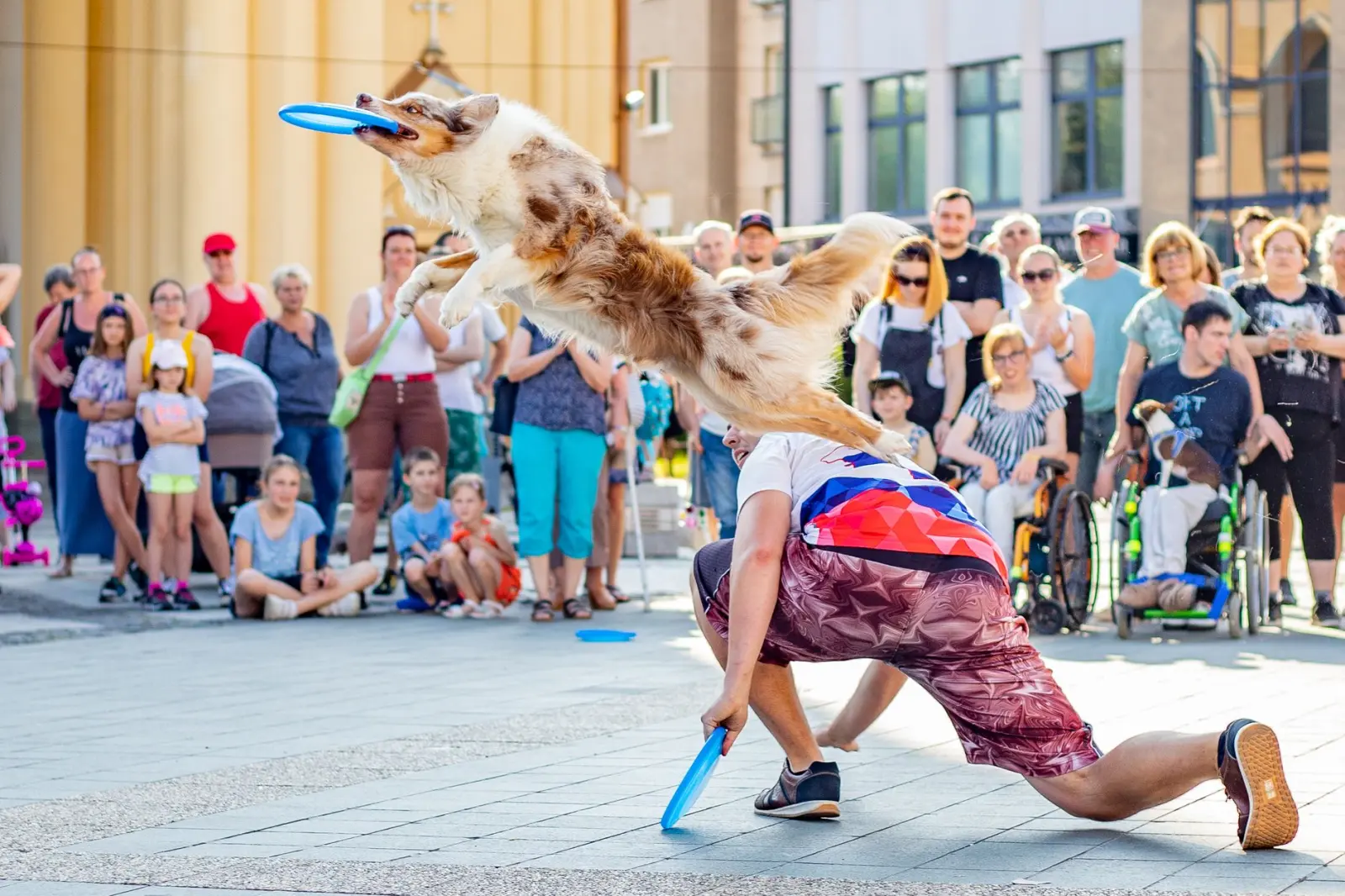
The jumping itself is ballistic. The dog accelerates across the dock, launches, travels through the air, and lands in water. Each phase loads different structures. The takeoff phase stresses the rear limbs – the hips, knees, and ankles. The landing phase, even in water, creates deceleration forces that the front limbs and shoulders absorb. If a dog hasn’t built the strength and stability to handle those forces, injury follows quietly. You won’t see a dramatic tear. You’ll see a dog who’s slightly off after a session, or who begins favoring a limb over weeks.
Building that conditioning takes time. Core work matters. Proprioceptive training – exercises that teach the dog to understand where their body is in space – matters. Controlled swimming before jumping matters. Many owners skip this phase because their Australian Shepherd is so eager to jump. The dog’s enthusiasm becomes a liability rather than an asset.
Water Confidence and Actual Ability
Not every Australian Shepherd is a natural swimmer, despite the breed’s reputation. Some are. Some have a coat density and body composition that makes them buoyant and efficient in water. Others are denser, less naturally buoyant, and have to work harder to stay afloat. Neither is a barrier to dock diving, but it changes the approach.
A dog who swims efficiently will jump farther because they’re not fighting the water. Their body position is better, their confidence is higher, and they recover faster between jumps. A dog who swims with effort will still jump, but they’ll fatigue sooner, and their distance will plateau earlier. This isn’t a reason to avoid the sport with a less-natural swimmer. It’s a reason to adjust expectations and training volume.
I’ve worked with Australian Shepherds who were genuinely nervous in water initially. The breed’s intelligence works both ways – they can overthink new situations. Patience matters here. Letting them wade, letting them play in shallow water, letting them discover that water is manageable on their terms. Forcing a nervous dog to jump is how you create lasting hesitation. Allowing them to build confidence gradually is how you get a willing participant.
The Repetition Question
Australian Shepherds want to work. They’ll jump until you stop them. This is a problem. The breed’s drive doesn’t match their body’s recovery capacity. A dog might be physically capable of six good jumps in a session. They’ll happily do twelve. The extra six aren’t building fitness. They’re accumulating fatigue and impact stress.
Effective training with this breed means restraint. It means stopping when the dog is still eager, not when they’re exhausted. It means spacing sessions appropriately – not jumping every day, not even every other day for most dogs. Three sessions per week with adequate rest is a reasonable framework for an Australian Shepherd actively training for dock diving. Some dogs need less. Few need more.
The fatigue factor also affects jump quality. A tired Australian Shepherd’s takeoff becomes sloppy. Their form deteriorates. They’re still jumping, but they’re jumping poorly, which trains poor mechanics. You’re teaching them the wrong pattern. It’s better to end the session early and preserve good form than to continue and reinforce inefficiency.
Common Issues That Emerge
Shoulder strain is the most frequent problem I see. The front limbs absorb significant force on landing. If the dog’s core isn’t strong enough, or if their shoulder stability is underdeveloped, the shoulder joint takes extra load. Early signs are subtle – a slight hesitation before jumping, a reluctance to make sharp turns after a session, or stiffness the morning after training.
Hip dysplasia, common in the breed, becomes relevant in dock diving contexts. A dog with mild hip dysplasia might be fine in normal life but struggle with the repeated launching motion. The condition doesn’t necessarily disqualify a dog from the sport, but it requires honesty about what the dog can handle. Genetic screening before starting serious training isn’t excessive. It’s practical.
Ear infections are underestimated. Water repeatedly entering the ear canal, especially in a breed with moderate ear coverage, creates an environment for bacterial or yeast growth. Australian Shepherds with longer ear leather are more susceptible. Post-session ear cleaning and drying are basic maintenance, not optional.
The Plateau and What It Means
Most Australian Shepherds hit a distance ceiling around 20 to 25 feet. Some go further. Many don’t. This plateau isn’t failure. It’s normal. The dog has reached the distance their body composition, jumping mechanics, and power output support. Pushing past it through more training doesn’t work. The distance doesn’t increase. The injury risk does.
At that point, the sport becomes about consistency and enjoyment rather than progression. A dog who reliably jumps 22 feet is doing well. The goal shifts from distance to reliability, to clean form, to maintaining the dog’s physical health while they participate in something they clearly enjoy.
Australian Shepherds often stay engaged with dock diving longer than other breeds because the activity aligns with their nature. They’re not doing it because they’re forced or because an owner is chasing a title. They’re doing it because jumping and retrieving from water is inherently rewarding to them. That motivation is valuable. Protecting it means respecting the dog’s physical limits, even when their enthusiasm suggests they have none.