
Australian Shepherd puppies are not naturally suited to long stretches alone, and the sooner you accept this, the easier the early months become. I’ve worked with enough Aussie litters to know that their energy, intelligence, and strong attachment to people make them genuinely uncomfortable with isolation. This isn’t a training failure on your part – it’s hardwired into the breed.
The practical window for solo time depends almost entirely on age. An eight-week-old puppy has a bladder capacity of roughly two hours, sometimes less on a busy day. A four-month-old might manage three to four hours. By six months, many Aussie puppies can handle four to five hours without distress, though they won’t enjoy it. These aren’t maximums to aim for; they’re realistic tolerances before things start breaking down – either physically through accidents or behaviorally through anxiety and destructive responses.
What I’ve noticed repeatedly is that owners often underestimate how much an Aussie puppy’s need for companionship drives their behavior. When left alone, they don’t simply nap and wait. They become problem-solvers in the worst way: chewing through drywall, shredding furniture, or finding creative ways to escape confined spaces. This isn’t rebellion. It’s a young dog experiencing genuine distress and trying to manage it the only way available to them.
The Reality of Bladder Control
Puppies under twelve weeks old cannot physically hold urine for extended periods, no matter how well-trained they are. A ten-week-old Aussie puppy left alone for six hours will have accidents – not because of poor housetraining, but because the sphincter muscles simply aren’t mature enough. I’ve seen owners blame themselves for this, but the biology doesn’t care about your schedule. The puppy’s kidneys are producing urine constantly, and the bladder fills predictably. Plan accordingly, or accept that accidents will happen.
By four months, you might see improvement, but it’s inconsistent. Some puppies show reliable control at this age; others need another month or two. Individual variation is real. I’ve had Aussie puppies in the same litter with very different timelines. Diet, water intake, activity level, and individual metabolism all play a role. A puppy that’s been playing hard will need to urinate sooner than one that’s been resting.
Separation Anxiety Looks Different Than You Might Think
Australian Shepherds are bred to work closely with people, responding to subtle cues and maintaining constant awareness of their handler’s location. This genetic predisposition means many Aussie puppies experience genuine anxiety when separated, even in a safe space. The anxiety doesn’t always look dramatic. Sometimes it’s quiet: a puppy that stops eating, becomes withdrawn, or sits by the door in a state of low-level distress. Other times it’s loud and destructive, which at least gets your attention.
What I’ve learned is that the anxiety often escalates with duration. A puppy left alone for thirty minutes might settle. At two hours, they’re usually managing. At four hours, many Aussie puppies start showing signs of stress – panting, pacing, or attempts to escape. By six or seven hours, you’re looking at a genuinely distressed animal. The damage that happens at this point isn’t malice; it’s panic.
Age-Appropriate Expectations
Eight to twelve weeks: Plan for no more than one to two hours at a stretch. Puppies this young need frequent potty breaks, feeding schedules, and socialization. Leaving them alone for a full workday is setting everyone up for failure.
Three to four months: Three to four hours becomes more feasible, but still not ideal. Many Aussie puppies at this age are managing better bladder control, but their emotional need for contact remains high. If you work full-time, midday care – a dog walker, neighbor, or daycare – is worth the investment.
Five to six months: Four to five hours is often realistic, though some puppies still struggle. This is the phase where you might see genuine improvement in independence, but it’s not universal. Temperament matters enormously. A naturally calm Aussie puppy might handle this better than a high-drive littermate.
Six months and beyond: By six to eight months, many Aussie puppies can manage five to six hours, though it depends heavily on the individual dog and what they’ve been conditioned to expect. A puppy raised with regular alone time tends to handle it better than one who’s been constantly supervised.
What Actually Works in Practice
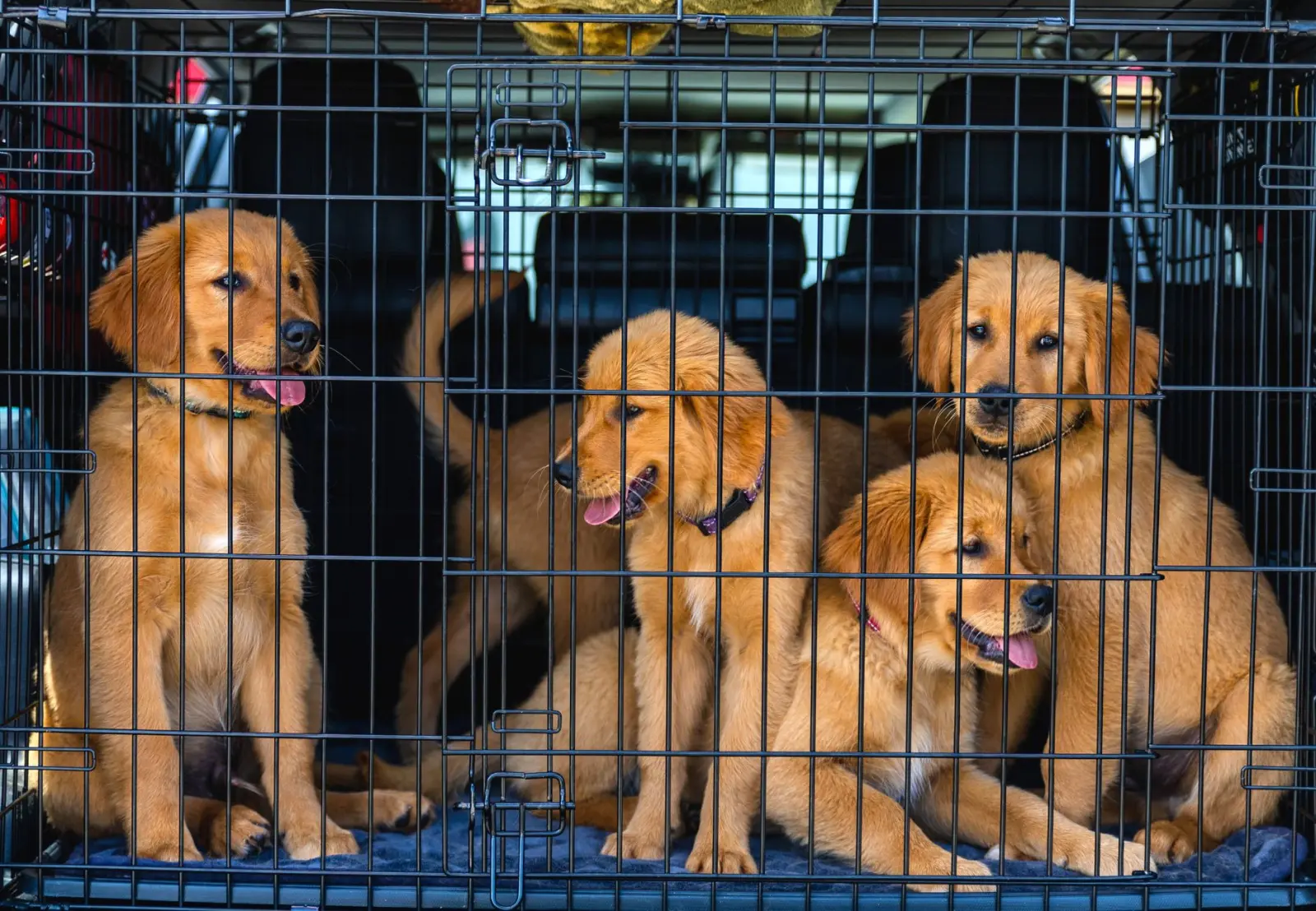
Crate training is genuinely useful for Aussie puppies, but not as a solution to long absences. A crate prevents destructive behavior and contains accidents, but it doesn’t prevent the puppy from experiencing distress. A puppy confined to a crate for six hours is still a distressed puppy; they’re just confined while distressed. Use the crate as a management tool for short periods, not as a way to extend alone time beyond what the puppy can actually handle.
Environmental enrichment helps somewhat. A puppy with access to chew toys, puzzle feeders, or long-lasting treats will stay occupied longer than one in an empty room. But enrichment isn’t a substitute for appropriate alone time limits. A bored puppy with toys is still a young dog with limited capacity for solitude.
Gradual conditioning matters. Puppies that are slowly introduced to alone time – starting with five minutes, then ten, then twenty – tend to handle it better than puppies suddenly left for hours. The nervous system adapts over time, but there are limits. You can’t condition a twelve-week-old puppy to be comfortable alone for eight hours through gradual exposure. The biology doesn’t support it.
Exercise before alone time helps, but again, it’s not a magic fix. A tired puppy might settle faster, but an Australian Shepherd puppy’s need for mental engagement is often more pressing than their need for physical rest. A mentally stimulated puppy that’s also been exercised will settle better than one that’s simply exhausted.
The Overlooked Factor: Individual Temperament
Not all Aussie puppies are identical in their tolerance for solitude. Some are naturally more independent; others are intensely people-focused from the start. Genetics, early socialization, and individual personality all influence how a puppy responds to being alone. A puppy from a line bred for independent work might handle alone time better than one from a line bred for close partnership. This doesn’t mean one is better – just different.
If you have an Aussie puppy that shows signs of genuine distress when alone – excessive vocalization, destructive behavior, or loss of appetite – it’s worth taking seriously. This isn’t something that training alone will fix quickly. It’s a young dog’s nervous system signaling that the separation is beyond their current capacity. Respecting that signal, rather than pushing through it, typically leads to better outcomes over time.
The practical reality for most households is that a full-time work schedule and a young Aussie puppy don’t align well without additional support. Midday breaks, dog walkers, daycare, or flexible work arrangements aren’t luxuries – they’re often necessary to keep both the puppy and your household functioning. This is especially true for the first four to six months. Once the puppy matures and has been gradually conditioned to alone time, the situation typically improves, but there’s no shortcut through the early phase.