

Australian Shepherds have a reputation for being protective, and there’s truth to it – but the reality is more nuanced than the breed stereotype suggests. I’ve worked with dozens of these dogs over the years, and what I’ve consistently observed is that their protective nature operates on a spectrum. Some are genuinely alert and responsive to unfamiliar people or situations. Others are friendly to nearly everyone they meet. The difference usually comes down to individual temperament, early socialization, and what specifically triggers their instinct to respond.
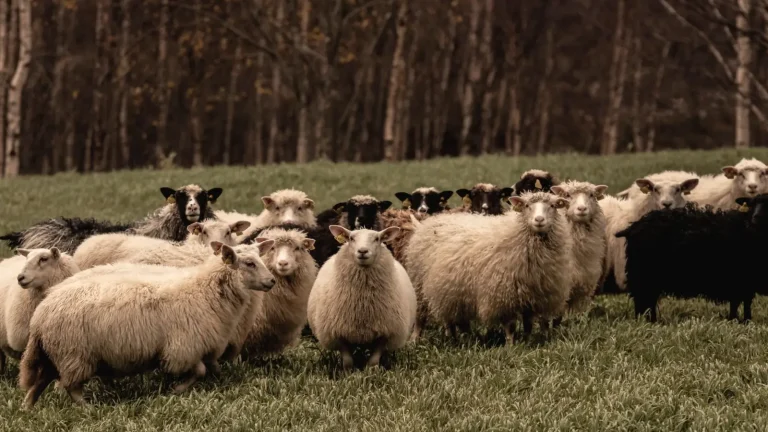
The protective behavior in Australian Shepherds isn’t the same as what you’d see in a German Shepherd or a Doberman bred for personal protection work. Instead, it’s rooted in their herding heritage. These dogs were developed to move and control livestock across large areas, often with minimal handler direction. That job required them to be alert, responsive to movement, and willing to act independently when needed. Those traits don’t disappear just because the dog now lives in a suburban home. They’re wired in, and they express themselves in how the dog relates to its environment and the people in it.
How the Herding Background Shapes Protection Instinct
What I’ve noticed most often is that Australian Shepherds are protective of their space and their people in a way that feels more like vigilance than aggression. A typical Aussie will notice when someone approaches the house or yard. They’ll often bark to alert you. They’re watching. But whether they’d actually confront an intruder or simply make noise is a different question entirely, and it varies considerably from dog to dog.
The herding instinct itself can look protective to someone unfamiliar with the breed. An Australian Shepherd might nip at a stranger’s heels or move between you and a visitor, behaviors that stem from their drive to control movement and position. To someone who doesn’t know the breed, this can read as protective or even aggressive. In reality, it’s often just the dog doing what its genetics tell it to do – managing space and movement. I’ve seen owners misinterpret this as their dog being “protective” when it’s really just the dog expressing normal herding behavior.
Individual Temperament Matters More Than Breed Reputation
Early exposure and socialization have a massive impact on how protective an Australian Shepherd becomes. A puppy raised around many different people, in varied environments, with positive interactions tends to be confident and discerning. That dog is less likely to see every stranger as a threat. It can distinguish between normal social situations and actual danger. Conversely, an Aussie with limited early exposure or negative experiences may become hypervigilant and reactive, seeing threats where none exist.
I’ve worked with Australian Shepherds that were genuinely protective – dogs that would position themselves between their owner and an unfamiliar person, that watched intently, that seemed to assess whether a visitor was a legitimate threat. But I’ve also worked with Aussies that were so friendly they’d happily leave with a stranger. The breed tendency is there, but it’s not deterministic. The dog’s individual personality, combined with how it was raised and what it’s been exposed to, determines whether that tendency develops into actual protective behavior.
What They’re Actually Protecting
When Australian Shepherds do show protective behavior, it’s usually directed at their immediate family or household. They’re not typically protective of property in the way some other breeds are. I’ve rarely seen an Aussie that cares much about defending a fence line or a yard from other dogs or people passing by. What they seem to care about is their people – or more specifically, the people they’ve bonded with and consider part of their pack.
This distinction is important because it affects how the dog behaves in different contexts. An Aussie might be alert and watchful when someone approaches the front door, but completely unconcerned when that same person is invited inside and sits down with the family. The dog isn’t protecting the house; it’s monitoring who’s approaching its people. Once the threat assessment is complete and the person is accepted, the protective behavior often drops away entirely.
The barking that Australian Shepherds do is often mistaken for aggression or strong protective instinct. In my experience, most of the barking is alerting – the dog is telling you something has changed in its environment. It’s communication, not necessarily a threat display. An Aussie that barks at the mailman isn’t necessarily trying to protect you from the mailman; it’s notifying you that something has happened and it’s worth your attention. Whether the dog actually feels protective or just finds the situation noteworthy can be hard to distinguish without knowing the individual dog well.
Training and Management Shape the Outcome
How you respond to an Australian Shepherd’s alert behavior directly influences whether it develops into stronger protective instincts. If you reward the barking, praise the dog for being “protective,” or allow it to escalate its responses, you’re reinforcing that behavior. The dog learns that alerting and reacting is what you want. Over time, this can create a dog that’s increasingly reactive and protective, even if that wasn’t the original temperament.
Conversely, if you teach an Aussie that visitors are generally fine, that alerting is noted but not necessary, and that calm behavior around people is what gets rewarded, the dog tends to become more relaxed. It still has the instinct to notice things, but it doesn’t feel compelled to respond dramatically every time something changes. The protective instinct doesn’t disappear; it just becomes more measured and appropriate to the actual situation.
Australian Shepherds are capable of being protective, and many of them naturally are to some degree. But their protection usually manifests as alertness and awareness rather than overt aggression. They’re watching, assessing, and ready to respond if they perceive a genuine threat to their people. Whether that protective nature becomes a prominent feature of the dog’s personality depends heavily on what the dog is exposed to early on and how you shape its responses as it matures. The breed tendency is real, but the expression of it is highly individual.