
Australian Shepherds arrive at agility with a significant advantage: they were bred to work independently, read livestock movement, and respond to subtle cues. When you start agility with one of these dogs, you’re not teaching them to think – you’re channeling thinking they already do. The challenge isn’t motivation or intelligence. It’s usually about focus, impulse control, and understanding that agility has different rules than herding.
I’ve worked with dozens of Aussies moving into agility, and the pattern is consistent. These dogs are fast learners, but they often arrive with habits that don’t translate well. A dog that’s spent years herding stock has developed a specific relationship with movement and pressure. In agility, that same dog needs to understand that the obstacle itself is the target, not the person holding the lead or the space around it. That shift takes time, and it’s more fundamental than most people expect.
Physical readiness matters before you touch a single jump. Australian Shepherds are athletic, but agility is specific. Their joints, ligaments, and muscles need conditioning that’s different from casual exercise. A dog that runs freely in a yard isn’t necessarily prepared for the repetitive impact and directional changes that agility demands. I’ve seen otherwise healthy Aussies develop soreness or minor injuries because they started jumping or weaving before their bodies were ready. Starting with ground work – pole weaving, low jumps, and controlled turns – isn’t boring. It’s foundational.
The focus question
This is where most Aussies struggle early on. These dogs are bred to notice everything. In a herding context, that’s valuable. In an agility ring with spectators, other dogs, and environmental distractions, that same trait becomes a liability. An Aussie’s attention splits easily, not because they’re disobedient, but because their instinct is to assess the entire situation.
Building reliable focus takes patience and consistency. It’s not about harsh corrections or dominance. It’s about making yourself and the work more interesting than the environment. Some handlers use toys, some use food, some use a specific word or gesture that signals “work mode.” What matters is that the dog learns the distinction between “we’re training” and “we’re at a trial.” I’ve found that Aussies respond well to variety in training locations and conditions, but only if the foundation is solid in a quiet space first. Reverse the order and you’re fighting their nature.
Drive and impulse control
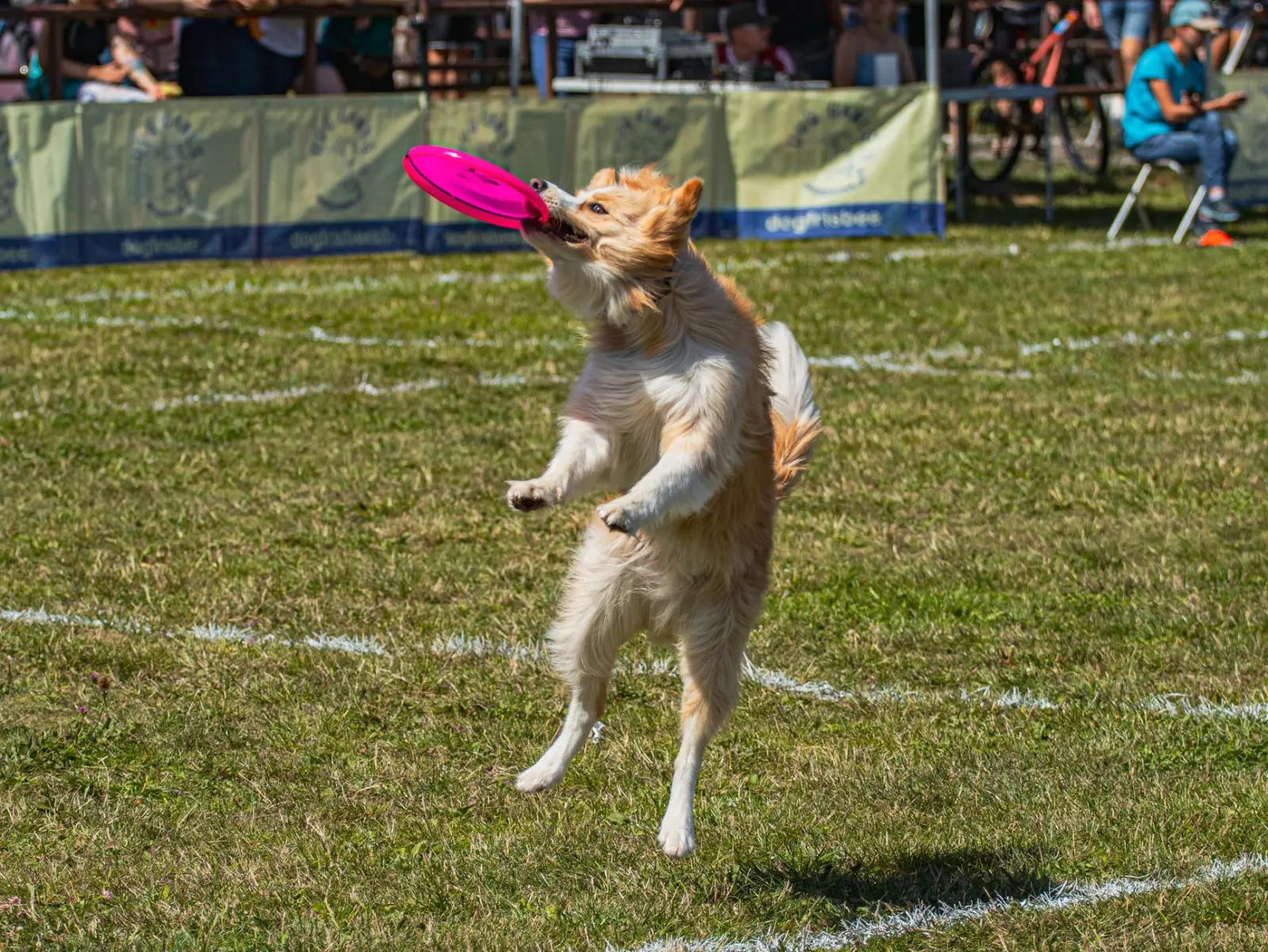
Australian Shepherds typically have strong prey and chase drives. In agility, that energy is useful – you want a dog that’s eager to move through obstacles. The problem emerges when that drive overrides obedience. A dog that bolts toward the next obstacle without waiting for direction, or that takes jumps out of sequence because they see them, isn’t being stubborn. They’re being a herding dog.
The solution isn’t suppressing that drive. It’s teaching the dog that waiting for your signal is actually more rewarding than acting on impulse. This is slower work than people expect. You’ll spend weeks or months on sits, waits, and controlled releases before the dog truly understands that agility has a structure. Some handlers use restraint exercises – holding the dog back while they watch other dogs run – to build that understanding. Others use extended waits at the start line. The method varies, but the principle is the same: impulse control is trained, not assumed.
What the obstacles teach
Once an Aussie understands the basic framework, obstacles become clearer to them. These dogs are problem-solvers. They figure out how to navigate a jump, a weave, or a tunnel fairly quickly. The real learning happens when you ask them to do it in sequence, at speed, and while maintaining connection with you. That’s where individual temperament shows up.
Some Aussies are naturally independent in agility – they’ll run a course with minimal handling and trust their own judgment. Others want constant reassurance and guidance. Neither is wrong. The independent ones need handlers who can read the course and trust the dog’s path. The handler-dependent ones need handlers who can give clear direction without creating anxiety. I’ve seen both types excel, but they require different approaches. Trying to force an independent Aussie into a dependent working style, or vice versa, creates confusion and frustration.
Age and readiness
There’s no magic number for starting agility, but Australian Shepherds aren’t fully mature until around eighteen months to two years. Before that, their joints are still closing and their coordination is still developing. Starting foundation work – basic obedience, low-impact exercises, and obstacle familiarization – at four to six months is reasonable. Jumping and sustained agility training should wait until the dog’s growth plates have closed and their body can handle the impact.
I’ve seen people push young Aussies too hard, too fast, driven by the dog’s obvious enthusiasm and athleticism. The dog’s eagerness doesn’t mean their body is ready. Patience in the early stages prevents injuries that can derail a dog’s agility career or create lasting physical problems. It’s one of the few areas where slowing down actually saves time.
Starting agility with an Australian Shepherd is straightforward in theory but requires attention to the specific traits these dogs bring to the sport. They’re capable, driven, and intelligent. They’re also independent thinkers with strong instincts that don’t automatically align with agility’s structure. The dogs that succeed are the ones whose handlers respect those traits while building the focus and impulse control that agility demands. It’s not a quick process, but it’s rarely complicated if you understand what you’re working with.