
Australian Shepherds develop cataracts more frequently than many other breeds, and after working with dozens of these dogs over the years, I’ve noticed the pattern is fairly consistent. The cloudiness starts small – often so subtle that owners miss it entirely at first – and then progresses at different rates depending on the individual dog. Some cases move slowly over years; others seem to accelerate rapidly. Understanding what you’re looking at when you notice changes in your dog’s eyes makes a real difference in how you approach care and decision-making.
The condition itself is straightforward: the lens becomes increasingly opaque, scattering light rather than focusing it clearly. In Australian Shepherds, this happens because of inherited genetic factors in many cases, though age-related cataracts also occur. What makes this breed notable is that juvenile cataracts – the kind that show up in younger dogs – appear with enough regularity that responsible breeders screen for them. If you’ve acquired your dog from a breeder, there’s a reasonable chance they’ve already had the sire and dam evaluated by a veterinary ophthalmologist.
How the Cloudiness Actually Appears
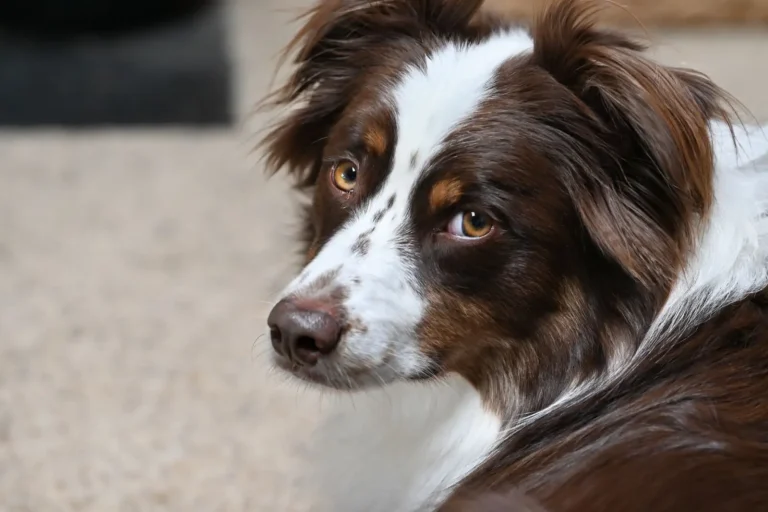
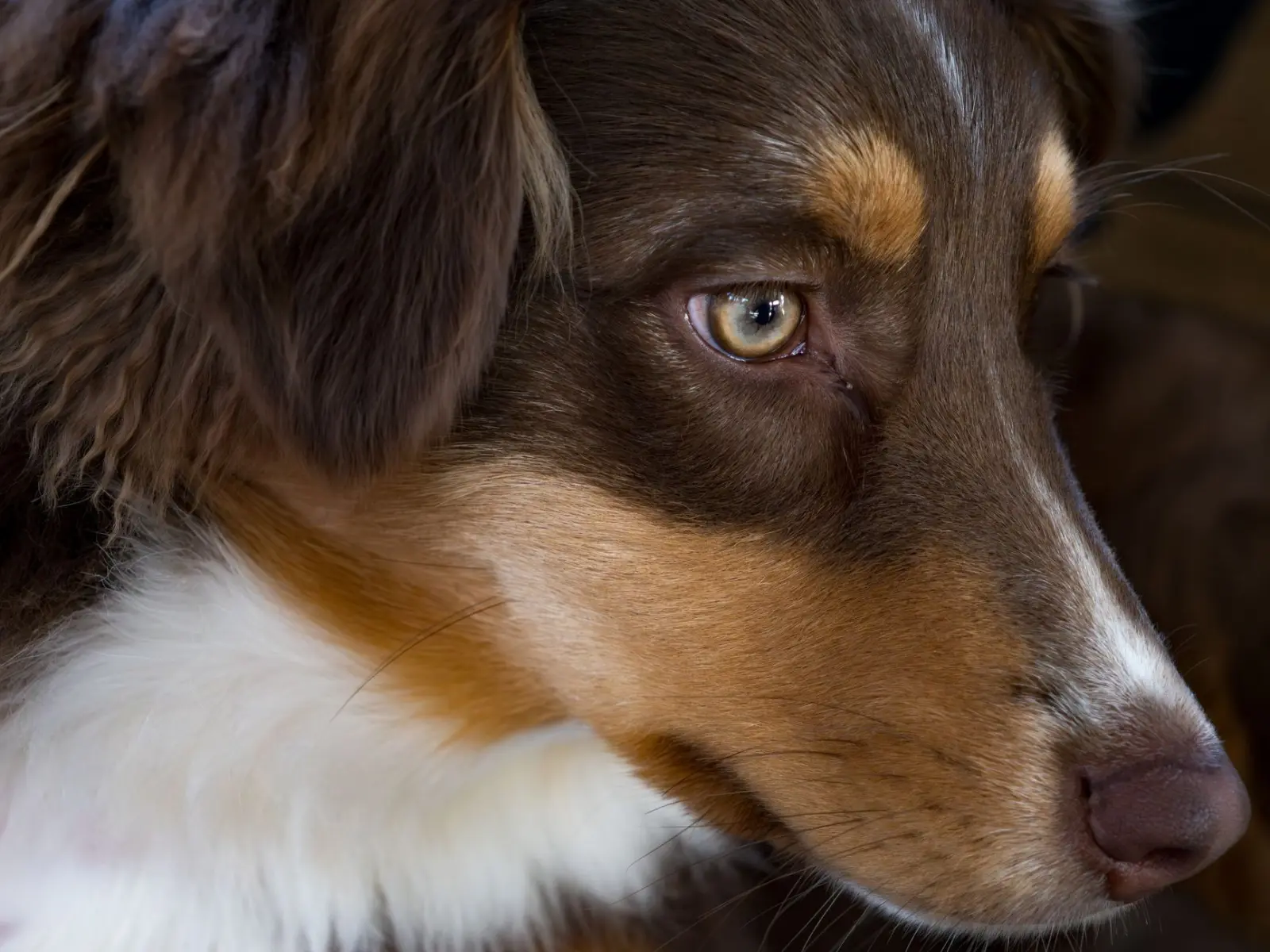
When cataracts first develop, you’ll notice a slight haziness in the lens when light hits it at certain angles. It’s not always obvious in normal indoor lighting. I’ve found that the best time to spot early changes is outdoors on a bright day, looking directly into the dog’s eye. The affected lens will have a milky or frosted appearance, sometimes with a subtle blue-gray tint. In Australian Shepherds with darker eyes, this can be harder to spot than in lighter-eyed dogs, simply because there’s less contrast.
Early cataracts are often confined to one area of the lens – the periphery, the center, or sometimes just the back surface. A dog with peripheral cataracts may have almost no vision loss at all, while a cataract developing in the center of the lens affects sight more noticeably. I’ve seen dogs navigate their homes and yards perfectly well with cataracts that look fairly advanced to the owner, because the dog is still able to see enough to function. Other dogs with less visually obvious cataracts start bumping into things or moving more cautiously.
What Changes You’ll Actually Notice
The behavioral shifts vary. Some dogs become slightly more hesitant in low light or when moving quickly through doorways. Others show almost no change in behavior until the cataracts are quite dense. Australian Shepherds are active, confident dogs by nature, so subtle vision loss can be masked by their familiarity with their environment and their willingness to move boldly through space. A dog that knows its home will navigate it reasonably well even with compromised vision.
What tends to show up first is reluctance in specific situations rather than across-the-board clumsiness. A dog might hesitate before jumping on or off furniture, or move more carefully when walking from a bright area into shade. Some become slightly more cautious around stairs or uneven ground. If your dog has always been a confident swimmer or retriever, you might notice it’s less eager to chase a ball into tall grass or across a field where visibility is poor.
Night vision degrades noticeably. Australian Shepherds that previously had no problem navigating a dark hallway or going outside at dusk may start moving more slowly or staying closer to you. This is one of the more reliable early indicators, because it’s a real functional change rather than something that could be attributed to age or mood.
The Progression and What Influences It
In my experience, the rate of progression is highly individual. I’ve worked with dogs whose cataracts remained stable for years at a similar density, and others where noticeable worsening happened over months. Genetics clearly plays a role in the speed, but I’ve also observed that dogs with concurrent health issues – particularly diabetes – tend to see faster cataract development. Nutrition doesn’t seem to slow or stop progression once it’s begun, though maintaining overall health is always worthwhile.
Some Australian Shepherds develop cataracts in both eyes at roughly the same rate, while others show a clear difference between the two. It’s not uncommon to see one eye significantly more affected than the other, even in genetic cases. This asymmetry can actually be useful because it sometimes allows a dog to function well enough that surgery isn’t immediately necessary – the less-affected eye compensates.
When Vision Loss Becomes a Real Problem
The point at which cataracts significantly impact daily life varies widely. A dog that spends most of its time in a familiar home environment can tolerate quite dense cataracts without major lifestyle changes. A dog that works, competes, or spends a lot of time outdoors in variable lighting will struggle sooner. Australian Shepherds bred for herding or agility work tend to notice functional decline earlier because their activities demand sharp vision.
What I’ve learned is that the cloudiness you see doesn’t always correlate directly with the dog’s experience of vision loss. A lens that looks quite opaque might still transmit enough light for the dog to see shapes and movement. Conversely, a cataract that looks less dramatic can sometimes scatter light in a way that creates significant glare and difficulty focusing. Only the dog knows how much it’s actually struggling.
Most owners don’t rush into surgery for early cataracts, and there’s no medical reason to do so. The lens won’t rupture or cause pain simply by being cloudy. Surgery becomes relevant when the dog’s quality of life is genuinely affected – when it’s bumping into things regularly, reluctant to move around, or when the owner feels the dog would benefit from restored vision. That’s a personal decision based on the individual dog’s situation and the owner’s resources and goals.
Working with an ophthalmologist who can grade the cataract and assess the dog’s eye health more broadly is valuable. They can tell you whether the cataract is progressing, whether both eyes are affected equally, and whether surgery would be likely to restore useful vision. Not all cataracts are equally suitable for surgical intervention, and not all dogs are good surgical candidates, so that professional assessment matters.
Living with a dog that has cataracts is manageable. Most Australian Shepherds adapt well to gradually declining vision, and many owners find that once they understand what they’re looking at, the anxiety decreases. The condition is common enough in the breed that it’s not a sign of poor care or breeding alone – it’s simply something that happens in this line of dogs with some frequency. Keeping the dog’s environment consistent, being mindful of hazards in low light, and maintaining regular veterinary eye exams gives you the information you need to make decisions as the situation evolves.