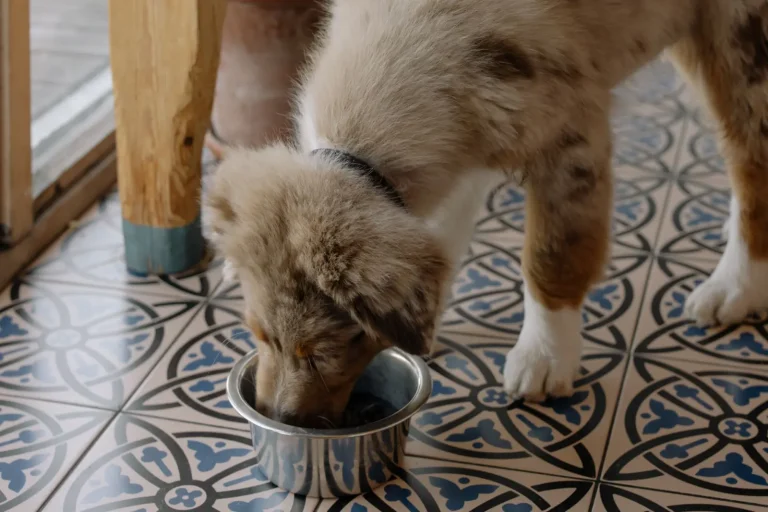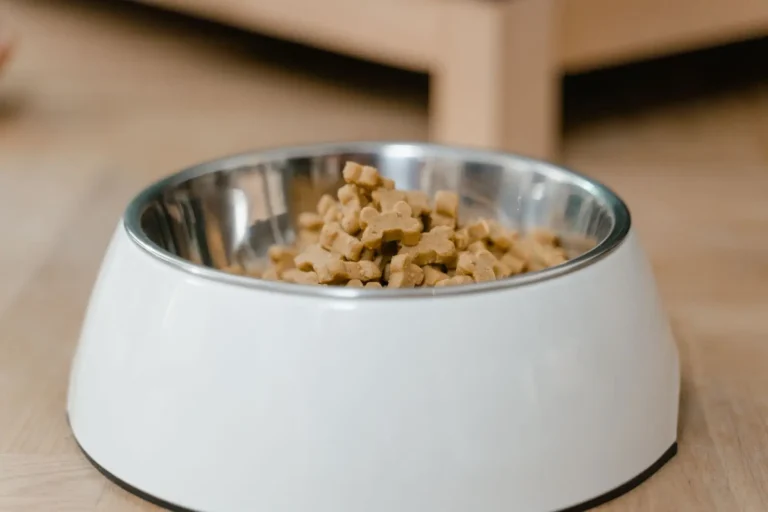

Australian Shepherd puppies are active, fast-growing dogs that need consistent feeding schedules and appropriate portion sizes. After working with dozens of these pups over the years, I’ve noticed that most owners either overfeed or underfeed without realizing it. The difference often comes down to understanding what your individual puppy actually needs rather than following a generic chart.
The amount your Australian Shepherd puppy eats will shift several times during the first year. A puppy at eight weeks old has completely different caloric needs than one at five months. Their stomachs are smaller, their metabolism is faster, and their growth rate is steep. What works for one month becomes inadequate the next. Many people get frustrated because they assume one feeding amount should work indefinitely, then they’re surprised when their puppy seems hungry or gains weight too quickly.
Starting with an eight-week-old puppy, most Australian Shepherds do well on three to four meals per day. The total daily amount typically falls between one-half cup to three-quarters cup of quality puppy food, divided across those meals. This assumes you’re using a commercial puppy formula designed for medium to large breeds. If you’re feeding raw or home-prepared diets, the amounts shift, but the principle remains the same: you’re feeding a growing body that needs more calories per pound of body weight than an adult dog.
Age-Based Changes in Appetite
At three to four months old, many Australian Shepherd puppies can transition to three meals per day. The total daily intake might increase to around one cup to one and a quarter cups, depending on the individual pup’s size and the caloric density of your chosen food. This is where I see feeding mistakes happen most often. Owners look at their growing puppy and think more food equals faster growth, but that’s not how it works. Overfeeding a growing large-breed dog can actually cause developmental orthopedic disease, where bones grow faster than ligaments and joints can support them. It’s a real concern with Australian Shepherds, not a theoretical one.
By five to six months, you can usually move to two meals per day. At this stage, total daily intake often reaches one and a half to two cups, though again, this varies. Some puppies are naturally smaller or have slower metabolisms. Others seem to burn through food constantly because they’re genuinely active. The key is watching your puppy’s body condition, not just following a feeding chart. You should be able to feel their ribs without pressing hard, see a waist when you look down at them, and notice a slight abdominal tuck when you look from the side.
Individual Variation Matters More Than You’d Think
I’ve seen Australian Shepherd littermates where one thrived on significantly less food than the other. Genetics, activity level, and individual metabolism create real differences. A puppy that spends most of the day in a crate or apartment will need less than one that’s running around a yard for hours. A pup with a slower metabolism might gain weight on the same amount that keeps another puppy lean. This is why feeding guidelines are starting points, not rules.
The quality of food also affects how much your puppy needs. A premium puppy formula with higher protein and fat content delivers more calories per cup than a budget brand. If you switch foods, you may need to adjust portions. Some owners don’t realize this and end up overfeeding when they upgrade to a better diet. The bag will have feeding guidelines, but those are often generous. Many puppies do fine on slightly less than the recommended amount.
Reading Your Puppy’s Body and Behavior
Hunger signals in puppies aren’t always straightforward. A puppy might seem hungry because they’re bored, seeking attention, or simply because they’re a puppy and puppies are often interested in food. Constant begging doesn’t necessarily mean you’re underfeeding. I’ve known puppies that would eat until they were uncomfortably full if given the chance. Conversely, some puppies are naturally less food-motivated and eat smaller amounts without any problem.
Energy level and growth rate are more reliable indicators. A puppy that’s gaining weight steadily, maintaining good muscle tone, and has plenty of energy for play and learning is likely eating the right amount. A puppy that seems lethargic, is losing weight, or has a dull coat might need more food or a diet change. A puppy that’s gaining weight too rapidly or seems uncomfortable after eating might be getting too much.
Treats and Training Snacks Change the Math
Most people underestimate how much they’re feeding their puppy through treats. If you’re doing training sessions, which you should be with an Australian Shepherd puppy, you’re adding calories throughout the day. These should come out of the main meal portions, not be added on top. A puppy that gets a quarter cup of kibble at breakfast, a quarter cup at lunch, a quarter cup at dinner, plus a quarter cup worth of treats during the day is actually eating a full cup more than you think.
I’ve watched owners puzzle over why their puppy is getting chubby when they’re “only feeding the recommended amount.” The missing piece is always the treats. Small training treats add up quickly, and it’s easy to lose track when you’re rewarding frequently throughout the day. If you’re doing serious training, reduce the main meals slightly to account for it.
Water and Digestion Patterns
Fresh water should always be available, but some owners restrict water thinking it helps with housebreaking. This can backfire. A puppy that’s not drinking enough can become constipated or develop other issues. Water intake and food intake are connected, and both affect digestion. A puppy eating the right amount of food but not drinking enough might seem constipated or uncomfortable.
Australian Shepherd puppies typically need to go outside within 15 to 30 minutes after eating. If you’re seeing accidents or urgency issues, it might be worth evaluating whether the puppy is eating too much at once rather than assuming it’s a training problem. Some puppies do better with slightly smaller portions more frequently than larger meals less often.
By around 12 months, most Australian Shepherds can transition to adult food and once-daily or twice-daily feeding. At that point, total daily intake typically ranges from one and a half to two and a half cups, depending on size and activity level. The transition should be gradual, mixing in adult food over a week or two to avoid digestive upset. From that point forward, your dog’s needs will stabilize, though active Australian Shepherds often need more food than less active dogs of the same weight.