

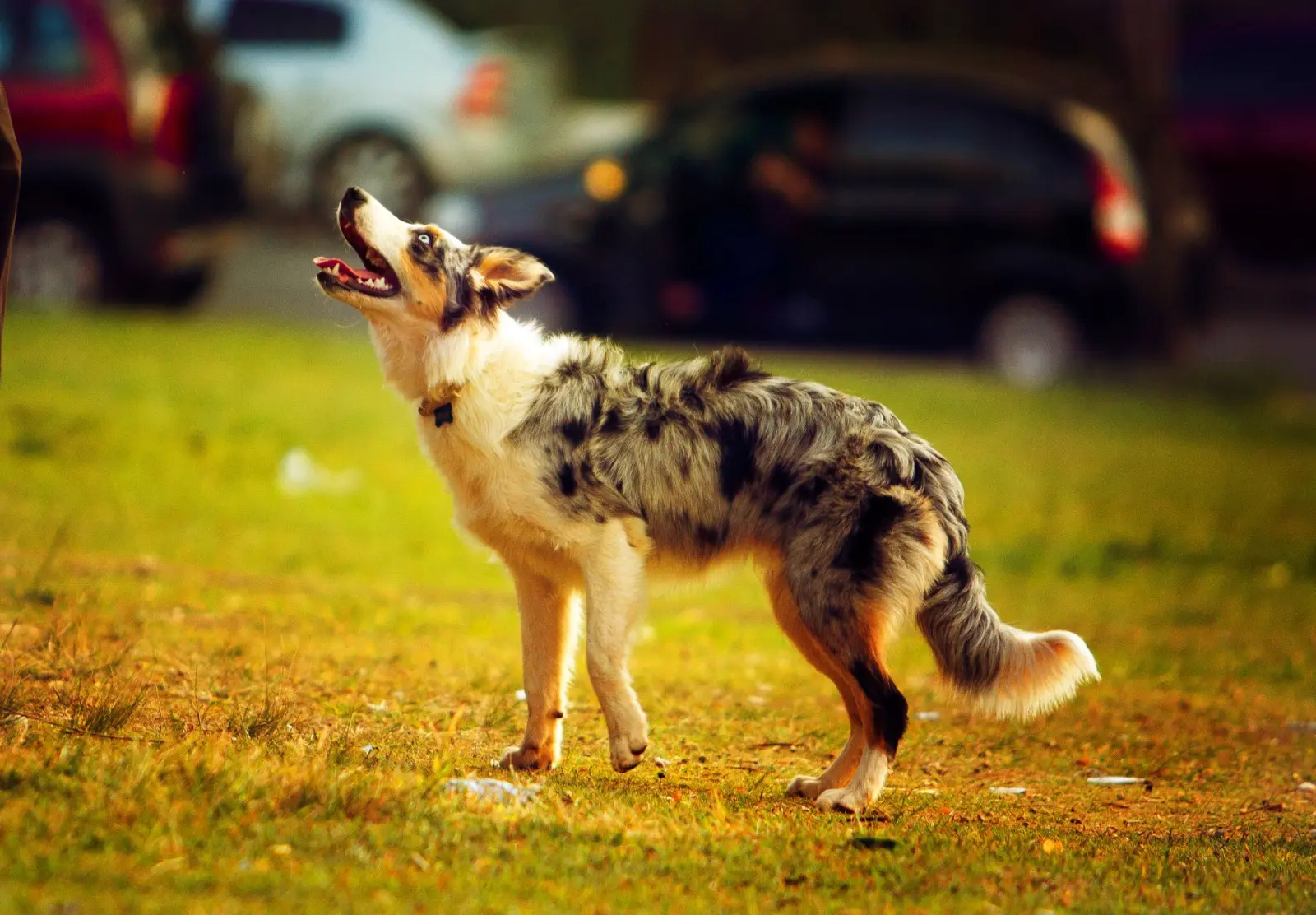
Australian Shepherds are genuinely different animals from most other dog breeds when it comes to sustained activity. Over years of working with them, what strikes me most is not that they’re hyperactive in the clinical sense, but that they operate on a fundamentally different baseline of arousal and drive. They’re not broken or anxious – they’re built this way.
The energy you see in an Australian Shepherd reflects something deeper than just a need for exercise. These dogs were developed to work cattle and sheep across rough terrain for entire days. That wasn’t a job that required a sprint followed by rest. It required steady, focused movement with the ability to shift gears quickly when needed. The breed was selected over generations for dogs that could maintain attention and physical engagement for hours without losing sharpness. That trait didn’t disappear when the dog moved into a suburban home.
What often gets misunderstood is the relationship between physical exercise and actual energy expenditure in this breed. A tired Australian Shepherd is not the same as a satisfied one. You can take an Aussie on a two-hour hike and they’ll return home, drink water, and within an hour be looking for something to do. The physical tiredness passes quickly because their baseline metabolism and drive are high. The mental engagement – the problem-solving, the focus, the sense of purpose – is what actually settles them.
Breeding History and Genetic Predisposition
The breed’s energy profile wasn’t accidental. Australian Shepherds were developed in the American West, refined from herding dogs brought by Basque shepherds. The dogs that survived and reproduced were the ones that could work independently, make quick decisions, and maintain intensity across long days. A dog that got tired easily or lost focus was less useful and less likely to be bred. Over enough generations, this creates a population where high drive becomes the norm rather than the exception.
Individual variation matters, though. Not every Australian Shepherd has identical energy levels. Some lines produce dogs that are more intense than others. Some individual dogs within the breed have slightly lower drive. But across the population, the baseline is set higher than in most companion breeds. This isn’t something that training or socialization can fundamentally change. You can teach an Australian Shepherd to wait, to settle, to focus on you – but you’re not lowering their baseline drive. You’re channeling it.
The Role of Mental Engagement
Where I see the biggest difference between Australian Shepherds and other dogs is in their response to mental work. A Golden Retriever might be content to lie on the floor after a walk. An Australian Shepherd, even after physical exercise, will often seek out a problem to solve. This might look like herding the cat, obsessively chasing a ball, or finding something to chew. It’s not always destructive, but it’s rarely passive.
The dogs that seem most settled in my experience are the ones with regular access to tasks that require decision-making and focus. This might be herding work itself, but it can also be training sessions, puzzle toys, or structured games that involve problem-solving. A 20-minute training session that requires the dog to think often produces more calm than a 45-minute walk. The mental fatigue is more complete.
This is also why Australian Shepherds often struggle in environments where they don’t have a clear job or role. They’re not necessarily anxious or misbehaving – they’re understimulated in a way that’s specific to their breed type. A Border Collie in the same situation would show similar patterns. These are working breeds with working-breed minds, and that doesn’t switch off just because they live in an apartment.
Age, Health, and Individual Variation
Age does affect energy levels, but perhaps not in the way people expect. A young Australian Shepherd puppy might actually seem calmer than a two-year-old because they tire more easily and sleep more frequently. As they mature, their stamina increases and their ability to sustain activity improves. By 18 months to three years, many Australian Shepherds are at their peak intensity. They don’t really settle into a noticeably lower energy state until they reach senior years, and even then, many remain active well into their 10s.
Health factors can mask or amplify the baseline energy. A dog with pain, thyroid issues, or other medical conditions might seem less energetic, but that’s not a reduction in their natural drive – it’s suppression due to discomfort or illness. Similarly, a very well-conditioned Australian Shepherd that gets appropriate mental and physical engagement might seem calmer than one that’s bored or frustrated, but the underlying drive is the same.
Some Australian Shepherds are genuinely lower-drive individuals. It happens. But if you’re living with one that seems to never settle, that’s not unusual for the breed. It’s normal. The question isn’t usually how to make them less energetic, but how to provide outlets that match what they’re built to do.
What Actually Works
The most functional approach I’ve seen is to stop fighting the energy and instead structure the dog’s day around it. This means regular physical activity, yes, but more importantly, it means regular mental engagement. Training sessions, games that require problem-solving, access to appropriate outlets for herding instinct – these matter more than marathon walks.
Consistency also matters. Australian Shepherds that have a predictable daily routine with regular work tend to be more settled than those with sporadic activity. They seem to understand what’s expected and settle into a rhythm. A dog that knows they’ll have a 15-minute training session every morning and a play session every evening often seems more content than one that gets random long outings followed by days of nothing.
The energy itself isn’t a problem to solve. It’s a feature of the breed. The real issue is whether that energy has an appropriate channel. In a home where the dog has work to do, a job to focus on, and regular mental engagement, that high drive becomes an asset. In a home where the dog is expected to be a passive companion, it becomes a frustration for everyone involved. Understanding which situation you’re in, and adjusting accordingly, makes more difference than any amount of extra exercise.