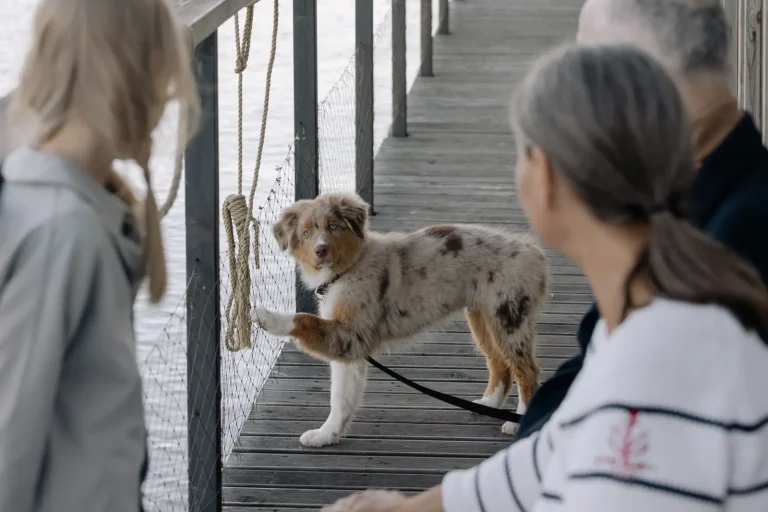


Australian Shepherds have paws that take a beating. Over years of working with this breed, I’ve noticed their feet are often the first place problems show up – sometimes before owners even realize there’s an issue. These dogs were bred to herd livestock across rough terrain for hours, which shaped their physiology in ways that still affect them today, even when they’re living as family pets in urban environments.
The paws themselves are built for work. They have strong, arched feet with tight webbing between the toes, which is excellent for traction and endurance. But this same structure can work against them in modern life. The tight webbing traps moisture and debris. The dense hair that grows between the pads collects mud, burrs, and ice. The constant motion and impact of a high-energy dog means wear accumulates faster than in less active breeds.
What I see most often is a combination of issues rather than isolated problems. An Australian Shepherd might develop interdigital dermatitis – inflammation between the toes – not from a single cause but from moisture trapped in the webbing, combined with the dog walking on hot pavement, plus a minor cut from a sharp stick. Each factor alone might be manageable, but together they create the conditions for infection or chronic irritation.
Interdigital Cysts and Chronic Inflammation
These are probably the most common paw complaint I encounter with this breed. They appear as firm, sometimes draining nodules between the toes, usually on the front feet. Owners often think it’s just a cyst that needs to be removed, but that’s rarely the complete picture. The cyst is usually a symptom of something deeper – either chronic moisture exposure, repetitive trauma from impact, or an underlying allergic component that makes the skin more vulnerable.
I’ve seen Australian Shepherds develop these after spending weeks playing in wet grass or swimming regularly. The moisture softens the skin, bacteria and yeast colonize the area, and the dog’s constant licking and chewing irritates it further. Once this cycle starts, it’s stubborn to break. Even when the cyst is surgically removed, it often returns unless the underlying conditions change.
The breed’s high drive to work and play means many Australian Shepherds are constantly on their feet, jumping, running, and pivoting. This repetitive impact and the constant flexing of the webbing between toes can create small fissures in the skin that become entry points for infection. The dog then licks the area, introducing more bacteria and creating inflammation that persists.
Pad Wear and Cracking
Australian Shepherds that spend significant time on hard surfaces – concrete, asphalt, tile – develop worn pads faster than you’d expect. The pads become thin and sometimes crack, especially if the dog is regularly running on hot pavement. I’ve worked with dogs whose pads were so worn that they were visibly thin and sensitive to touch.
This is different from the normal wear that comes with activity. It’s an actual loss of the protective callus layer. When pads crack, it’s painful, and the dog compensates by changing their gait, which then creates problems up the leg. I’ve seen dogs develop lameness in the shoulder or hip because they were favoring a cracked pad on the opposite side.
The issue is compounded in warmer climates or during summer months. Hot pavement doesn’t just wear the pads – it can actually burn them. A dog’s pads are tougher than human skin, but they’re not immune to heat damage. I’ve seen Australian Shepherds with blistered pads from running on hot concrete for extended periods, sometimes without the owner realizing what was happening because the dog didn’t show obvious distress until days later.
Allergies and Secondary Infections
Many Australian Shepherds carry a genetic predisposition to allergies, and the paws are often where this manifests first. An allergic reaction causes itching and inflammation, the dog licks and chews, and secondary bacterial or yeast infections follow. The paws become red, swollen, and sometimes produce a distinctive smell – usually yeasty or musty.
What makes this tricky is that the allergy might be environmental, food-based, or contact-related, and it’s not always obvious which one. A dog might be allergic to grass pollens, which means their paws are exposed to the allergen every time they go outside. Or they might have a food sensitivity that triggers systemic inflammation, making all their skin more reactive. I’ve worked with dogs where the paw problem only resolved after identifying and removing a specific ingredient from their diet.
The secondary infection is the part that perpetuates the cycle. Once bacteria or yeast establish themselves in the moist environment between the toes, they’re difficult to clear without addressing both the infection and the underlying cause. Topical treatments alone rarely work because they don’t reach deep into the webbing or address why the infection took hold in the first place.
Nail and Nail Bed Issues
Australian Shepherds often have strong, fast-growing nails. When nails aren’t trimmed regularly, they can curl back into the pad or put pressure on the toes in ways that cause discomfort and alter the dog’s gait. I’ve seen dogs with chronically overgrown nails develop arthritis-like symptoms in their feet because of the constant abnormal pressure.
Nail bed infections are less common but more serious. They usually happen after a nail is cracked or broken, or sometimes from a splinter or foreign object working its way into the nail bed. The infection can be painful and may require systemic antibiotics to resolve. Prevention is much simpler than treatment – regular nail trimming and checking for cracks or damage.
Managing Paw Health in This Breed
What I’ve found effective over time is regular maintenance rather than waiting for problems to develop. This means checking the paws several times a week, especially if the dog is active. Look between the toes for redness, swelling, or discharge. Feel the pads for cracks or soft spots. Trim the hair between the pads regularly – this alone reduces moisture retention significantly.
Drying the paws after exposure to water or wet grass is worth the effort. I’ve seen owners who simply wipe their dog’s paws with a towel after outdoor activity reduce paw problems substantially. For dogs prone to interdigital dermatitis, keeping the webbing dry is often the most effective preventive measure.
Managing activity on hard surfaces matters more than people realize. An Australian Shepherd that runs daily on concrete is going to have different paw wear than one that runs on grass or dirt. If hard surface activity is unavoidable, regular pad conditioning and occasional breaks on softer terrain help. Some owners find that protective booties during high-activity periods reduce wear and prevent cracks from developing.
When problems do develop, addressing them early prevents them from becoming chronic. A minor red spot between the toes that’s caught early might resolve with a few days of careful cleaning and drying. The same issue left untreated for weeks often requires medication and takes months to fully resolve. I’ve learned to take even small signs seriously with this breed because their activity level and the structure of their paws mean small problems escalate quickly.
Australian Shepherds are resilient dogs, and their paws are built for work. But that same design that makes them excellent working dogs also makes them prone to specific issues in domestic life. Understanding what tends to go wrong and staying ahead of it with regular maintenance is more effective than trying to fix problems after they’ve become established.